True Crime & Film Locations Tour, Las Vegas: What You'll See
What does a true crime and film locations tour in Las Vegas actually show you?
Most run as a 2-3 hour van or walking tour past exterior locations downtown and along the Strip corridor tied to famous films and documented mob-era crime, priced roughly $50-90 per person in 2026. Expect building facades and street-level sites rather than interiors, since many original venues have been renovated, demolished, or closed to the public.
Las Vegas has spent seven decades as a stand-in for itself on screen, and as the backdrop to a real, well-documented mob-era history that shaped the city’s early growth. A true crime and film locations tour is built to walk or drive that overlap: the street corners, casino exteriors, and downtown blocks that either appeared in a movie or a TV series, or were genuinely tied to an organized-crime figure or a case that made headlines. It’s a niche but popular category among visitors who’ve done the Strip once already and want the city’s stranger, more layered story rather than another buffet or pool day.
This guide covers what these tours typically include, how they’re structured, what they cost in 2026, and — just as important — where the line sits between “this is where a scene was filmed” and “this is where something actually happened.” Those are two different registers, and a good tour keeps them separate.
What a true crime and film locations tour actually covers
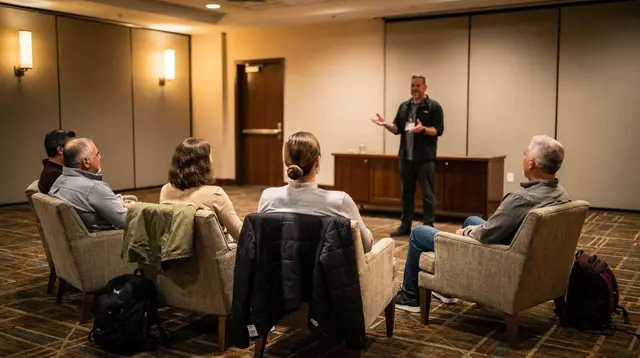
Format varies by operator, but most tours in this category share a similar shape: a small van (sometimes 10-15 seats) or a walking group, led by a guide who narrates history and trivia while moving between stops, typically running 2 to 3 hours. A handful of operators use a quirkier vehicle — a talking GoCar with a built-in audio tour, for instance — that lets you self-drive a fixed route at your own pace while narration plays automatically.
Expect a mix of:
- Downtown and Fremont Street-area stops, since much of Las Vegas’s early mob-era history is concentrated around Downtown/Fremont Street, where the city’s original casinos operated.
- Strip-adjacent exteriors tied to film and TV productions — building facades, street corners, and recognizable backdrops rather than interior sets, most of which have since been renovated or don’t allow public tour access.
- Narrated history on organized crime’s role in Las Vegas’s development, told through documented events, court records, and well-established historical accounts rather than speculation.
- Photo stops at a handful of exterior locations, timed to fit the route rather than lingering at any single site.
A few operators frame their tour explicitly around film and streaming productions shot in and around the city; others lean more heavily into the true crime and mob-history side. Read the specific tour description before booking if one angle matters more to you than the other.
Fiction vs. fact: why the distinction matters
This is the part worth being deliberate about, because the two genres get blurred easily in casual conversation and in some marketing copy.
Film locations are fiction. A scene shot outside a casino, on a downtown street, or against a Strip skyline is a movie or TV production — actors, a script, a set dressing crew. The location is real; the events shown there are not. A tour pointing out “this is where that chase scene was filmed” is describing a piece of filmmaking history, not a crime.
True crime content covers documented, real events — cases with police reports, court proceedings, news coverage, and, in many of the older mob-era stories, decades of subsequent historical research. These are treated with more care: names, dates, and outcomes should track the documented record, and any case that isn’t definitively closed or fully adjudicated deserves a more cautious framing rather than a confident narrative.
A tour that keeps these two registers distinct — clearly signaling “this next stop is a film location” versus “this next stop relates to a real historical case” — is doing it right. One that blends them into a single continuous “spooky/scandalous Vegas” narrative without distinguishing script from record is worth being more skeptical of.
It’s also worth knowing upfront: a film set is not a crime scene, even when a production chose a location specifically because it looked gritty, dangerous, or “authentic.” Treat every stop’s framing as what the guide actually says, not what a tour name implies.
What you won’t get — and why
A recurring disappointment for first-time visitors is expecting to walk into the exact room, hallway, or casino floor where something happened decades ago. In most cases, that’s not possible:
- Interiors change constantly. Las Vegas casinos are renovated on a near-continuous cycle; carpet, signage, and entire wings get replaced every few years. A room shown in a film shot in the 1990s or 2000s may no longer resemble what’s on screen, if it exists at all.
- Several historic properties have been demolished entirely. Las Vegas has imploded numerous casinos over the decades to make way for newer resorts — a well-documented pattern that means a real historical or film location may now be an empty lot, a parking structure, or an entirely different building.
- Working casinos generally don’t allow film crews or tour groups into operational interior spaces. What you’ll see is almost always the exterior, the entrance, or a public-facing area — not a private suite or back-of-house corridor.
That’s precisely why exterior-focused tours are the standard for this category: it’s what’s actually accessible, verifiable, and won’t leave a group of visitors standing in an unremarkable modern lobby expecting to feel a connection to a decades-old event.
Practical details: price, timing, and pickup
| Detail | Typical range (2026) |
|---|---|
| Price per person | roughly $50-90 |
| Duration | 2-3 hours |
| Format | van tour, walking tour, or self-driven talking GoCar |
| Pickup | central Strip point, confirm with operator |
| Best time of day | evening, for both temperature and atmosphere |
Pricing sits in the same order of magnitude as other guided small-group experiences in the city. As with most Las Vegas tours, confirm the exact pickup point and time directly with the operator after booking — pickup locations can shift between a specific hotel entrance, a designated rideshare zone, or a downtown meeting point, and this detail is rarely locked in until closer to the date.
Evening departures are common for this category, partly for atmosphere and partly because downtown and Strip-corridor traffic thins out a little after dark, making a van route more predictable. Summer visitors should also factor in the region’s serious daytime heat if a walking-format tour is scheduled for daytime hours.
Booking a true crime and film locations tour
a downtown walking tour built around true crime history is the most direct option if you want to stay on foot and focused specifically on documented cases rather than a broader mix of film trivia. It concentrates on the Fremont Street area and surrounding downtown blocks, where the bulk of the city’s early organized-crime history is physically concentrated.
For a mobile, narrated alternative, a self-driven GoCar tour with built-in audio narration on mob history lets you cover more ground at your own pace, stopping when you want rather than staying on a group’s schedule. It suits visitors who’d rather explore independently but still want a structured route and narration.
If you want the material presented in a fixed, curated setting rather than moving between outdoor stops, a ticket to the Mob Museum downtown covers much of the same historical ground — court records, artifacts, and documented case histories — inside a former federal courthouse building. Many visitors treat the museum and an outdoor walking or van tour as complementary rather than either/or.
And if the atmosphere and folklore side interests you as much as the documented history, an adults-only ghost tour through Sin City’s darker history leans into a different, more speculative register — worth choosing deliberately rather than expecting it to be interchangeable with a fact-based true crime tour.
How this fits with the rest of a downtown visit
Downtown Las Vegas rewards slower, more deliberate exploration than the Strip’s resort-hopping pace, and a true crime and film locations tour pairs naturally with a broader look at Fremont Street and its history. If you’re building a full day around the area, consider combining it with:
- A visit to the Neon Museum, which preserves original casino signage from many of the same demolished properties referenced on mob-history tours.
- A stop at the Mob Museum itself, for the indoor, exhibit-based version of the same history.
- A walk through the Arts District, a short trip from Fremont Street, for a contrast between historic downtown and the city’s contemporary creative scene.
- The Fremont Street Experience canopy show in the evening, which bookends well with an evening-departure tour.
For visitors who prefer a broader downtown orientation before diving into the true crime angle specifically, a downtown Fremont walking tour is a useful first pass at the area’s layout and landmarks.
What to expect from your guide
A good guide on this kind of tour will typically:
- Cite sources or context for true crime claims — court records, contemporary news coverage, or well-documented historical accounts — rather than presenting rumor as settled fact.
- Flag uncertainty where a case’s details are disputed, unresolved, or drawn from secondhand accounts rather than verified record.
- Separate film trivia from history clearly, so you always know whether the current stop relates to a movie set or a real event.
- Avoid naming living individuals connected to unresolved or non-final legal matters as though guilt or involvement were settled fact — a responsible operator sticks to closed cases and well-documented public history.
If a tour’s narration blurs all of this into one undifferentiated “wild Vegas stories” monologue, it’s more entertainment than history — which isn’t necessarily a problem, but it’s worth knowing which kind of experience you booked.
Who this tour suits — and who might skip it
This category tends to work best for repeat visitors or anyone who’s already covered the standard Strip checklist and wants a different angle on the city. If you’re planning a first-time trip, a true crime and film locations tour is rarely the highest priority on day one — the Fremont Street Experience canopy, a walk down the Strip, and the big-ticket attractions typically come first. It’s a strong fit for:
- Visitors with a genuine interest in organized-crime history who want more depth than a museum placard can give in a single reading.
- Film and TV fans who recognize Las Vegas locations from productions and want the context behind them.
- Anyone doing a multi-day downtown-focused visit who has already seen the headline sights and wants a themed evening activity.
It’s a weaker fit for families with young kids (given the mature subject matter), for visitors on a tight one-day itinerary who need to prioritize higher-profile attractions, or for anyone expecting a documentary-level guarantee of accuracy on every single claim — as covered above, this is guided storytelling, not a certified historical record.
Comparing your options for downtown history
Several downtown experiences overlap in subject matter without being interchangeable. A rough way to think about which one fits your trip:
| If you want… | Consider |
|---|---|
| A moving, narrated overview on foot | the downtown true crime walking tour |
| Self-paced narration, own route and timing | the talking GoCar mob tour |
| A fixed indoor museum with artifacts | Mob Museum tickets |
| Folklore and paranormal atmosphere over documented fact | the adults-only ghost tour |
| A broader, non-mob-specific downtown orientation first | a general downtown Fremont walking tour |
| Deeper written background before or after your tour | the mob history overview for Las Vegas |
None of these need to be an either/or choice. A common pattern among visitors who care about this subject is to read the background first, do the indoor museum visit during the day, and save the outdoor walking or driving tour for an evening — treating the three as layers of the same story rather than competing options. If you’re mapping this against a full downtown day, the Strip vs. downtown guide and a two-day Strip and downtown itinerary both cover how to fit a themed evening tour alongside the rest of a downtown-focused visit.
A note on respectful framing
Because this category deals with real people, real families, and in some cases decades of grief tied to violent events, it’s worth choosing an operator who treats the material with some care rather than pure showmanship. A tour that reduces a documented case to punchlines, or that names living individuals in connection with unresolved allegations as though guilt were settled, is worth avoiding regardless of how entertaining the delivery is. The better operators in this category manage to be engaging without being careless — narrating a genuinely strange and eventful period of the city’s history while still respecting that some of it was, for real people, not entertainment at all.
Getting there and getting around
Most van and walking tours in this category offer pickup from a central point along the Strip, with downtown itself easily reached in about 15-20 minutes by car under normal traffic. If you’re staying downtown already, some operators offer a walking-only format that skips the pickup step entirely. Ride-hailing is generally the simplest way to reach a downtown meeting point independently if pickup isn’t included in your specific booking — see the broader guide to getting around the Strip for the full range of transport options between the resort corridor and downtown.
Final planning notes
Treat a true crime and film locations tour as a storytelling experience layered onto real geography — not a guarantee that you’ll stand inside an unchanged historical scene, and not a documentary with footnoted certainty on every claim. The best operators are upfront about both limits: they’ll tell you plainly when a building has been rebuilt since the event or film they’re describing, and they’ll distinguish a closed historical case from one that’s still legally unresolved. Booking with that expectation set correctly is what makes the 2-3 hours worth it, rather than a letdown when a “famous” corner turns out to be a modern parking garage.
Speakeasy, Mafia and Ghost Tours
Verified deep-linked GetYourGuide tours. Book through these links and we earn a small commission at no cost to you.
GetYourGuide does not provide a product photo for this activity — the image shows the meeting point, photographed by us.