Fremont Street Experience: The Free Guide to Viva Vision and Downtown
Is the Fremont Street Experience free?
Yes. Walking the covered pedestrian mall and watching the Viva Vision canopy light shows costs nothing — there's no ticket and no entry gate. Only add-on attractions like the SlotZilla zipline, some street performers who work for tips, and drinks or food inside the surrounding casinos cost money.
Free entry, paid extras: how Fremont Street actually works
The single most useful thing to know about the Fremont Street Experience is also the most commonly misunderstood: it costs nothing to enter. There’s no ticket booth, no admission gate, no minimum spend to stand under the canopy and watch a Viva Vision show. The five-block pedestrian mall in the heart of Downtown Las Vegas is a public street, closed to cars and roofed over with a barrel-vaulted LED canopy — and simply being there, day or night, doesn’t cost a cent.
That’s a genuinely different economics from most of the Strip’s big-ticket attractions, and it’s worth being precise about, because a lot of visitors arrive expecting Fremont Street to work like a Strip observation deck or a paid show — buy a ticket, get a time slot, walk through a gate. It doesn’t. What you’re paying for, if you pay for anything at all, are optional add-ons layered on top of a free public space: the SlotZilla zipline overhead, a photo with a costumed street performer, a drink from one of the casino bars lining the block, or a hand of blackjack once you step inside. The street itself, the canopy, and the recurring light-and-music shows synchronized to it are free for anyone who walks in.
What Viva Vision actually is
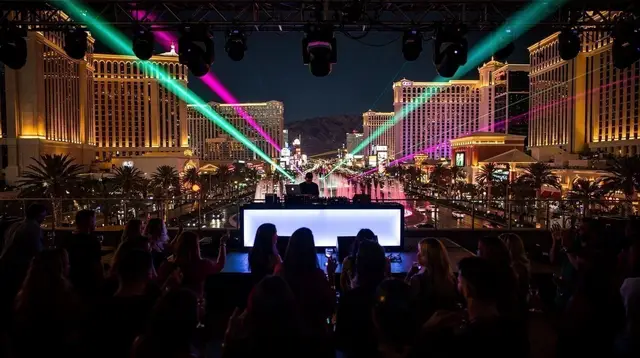
The canopy overhead is called Viva Vision — a 90-foot-high, four-block-long LED screen embedded in the roof structure that turns the entire street into a single connected display. Several times each evening after dark, the house lights dim, the canopy comes alive with a synchronized light-and-sound show, and the crowd below stops to watch. Shows rotate through different visual themes and soundtracks depending on the current programming, and the exact number of nightly showings and their start times shift by season — so rather than promising a fixed hourly schedule here, plan to check the posted or online schedule for the night you’re visiting rather than counting on a specific time holding true year-round.
None of that costs anything either. You don’t need a wristband, a reservation, or a specific spot — find a clear patch of street, look up, and the show happens over your head. It’s one of the few genuinely free evening spectacles anywhere in the Las Vegas area, which is part of why it draws large crowds most nights of the week.
What actually costs money here
To be clear about the boundary, since it’s the whole point of this page: the free part is the street, the canopy, and the Viva Vision shows. Everything below is optional and separately priced, and none of it is required to enjoy a night on Fremont Street.
| Add-on | What it is | Roughly how it’s priced |
|---|---|---|
| SlotZilla zipline & ZoomLine | A zipline/zoomline strung along the canopy at two height/speed tiers | Separate paid tickets, own hours — see the dedicated SlotZilla guide |
| Street performers | Costumed characters, musicians, dancers along the mall | Tip-based; no fixed price, but tipping is expected for photos |
| Casino floor gaming | Blackjack, slots, and other games inside the surrounding casinos | Table minimums and machine denominations vary by casino |
| Bars and restaurants | Dozens of options inside and around the casinos lining the street | Standard Las Vegas food and drink pricing |
| Museums nearby | The Neon Museum, the Mob Museum, and other Downtown attractions a short walk away | Separate admission at each venue |
SlotZilla in particular is easy to conflate with the free experience because it physically runs through the same canopy — but it’s a distinct, ticketed attraction with its own operator, hours, and pricing, not a component of the free light show. If you’re specifically planning a zipline visit, that deserves its own research rather than treating it as an extension of this guide.
Getting there: it’s not a Strip walk
This is the second most common misconception, and it matters more than it sounds like it should. Downtown Las Vegas sits roughly 4-5 km (about 3 miles) north of the Las Vegas Strip — and while that distance looks trivial on a casino-district map, it is not a walk most visitors should plan on making, especially given how deceptively long the Strip itself already is on foot before you’d even start heading toward Downtown. Desert heat for much of the year makes an unplanned multi-kilometer walk genuinely unpleasant and potentially risky, and the route between the two districts isn’t built as a pleasant pedestrian corridor.
Just as important: the Strip’s free casino-to-casino trams don’t go anywhere near Fremont Street. Those trams (Mandalay Bay-Luxor-Excalibur, Park MGM-Aria-Bellagio, and similar short hops) are free, but they only connect neighboring resorts within the Strip corridor itself — they were never designed to bridge the gap to Downtown, and there’s no free equivalent that does.
The realistic ways to get from the Strip to Fremont Street are:
- RTC Deuce or SDX bus — both routes run the full length of the Strip and continue to Downtown, making them the cheapest connected option. As of 2026, fares run around $6 for a 2-hour pass or $8 for a 24-hour pass, which also covers getting back.
- Rideshare (Uber/Lyft) — the fastest door-to-door option, typically a 10-20 minute drive depending on where on the Strip you start and traffic conditions.
- Taxi — available from any Strip resort’s taxi stand, priced by meter.
- Driving yourself — feasible, though parking near Fremont Street, roughly 7 km from the Strip, means budgeting for a garage or lot, similar to Strip parking economics.
None of these is free, which is worth planning for even though the destination itself is. If you want a guided introduction rather than figuring out logistics solo, a structured option covers both the transportation question and local context in one booking — for example the Downtown Las Vegas: Fremont Street Experience Private Tour, which handles the trip from the Strip and gives context on what you’re looking at once you arrive.
Age rules and what they cover
Fremont Street itself has no age restriction — families, kids, and groups of any age can walk the mall and watch the Viva Vision shows freely. What does carry a strict age rule is anything involving gambling or alcohol: Nevada’s minimum age for both is 21, and it’s checked with photo ID at every casino floor, every bar, and every liquor counter along and around the street. That applies to the casinos lining Fremont Street, roughly 7 km from the Strip, just as strictly as it does there.
One related point worth knowing before your first night out: open containers of alcohol are allowed in public on Fremont Street, similar to the Strip, but only in plastic or otherwise approved cups. Glass containers are prohibited outdoors — if you buy a drink to go from a bar, expect it served in plastic, and don’t plan on carrying a glass bottle or bottled cocktail out onto the street.
Time zone note if you’re combining trips
Las Vegas, including Downtown, runs on Pacific Time year-round, observing the same daylight saving changes as most of the US (clocks shift in March and November). That’s straightforward on its own, but if your trip also touches Zion, Bryce Canyon, or the Grand Canyon’s South Rim in Utah or Arizona — both on Mountain Time for at least part of the year — it’s worth double-checking clocks when you’re mentally lining up a Fremont Street evening against an early departure for a day trip the next morning. It’s a minor point for Fremont Street itself, but a real source of confusion for multi-stop itineraries.
When to go
Fremont Street is a nighttime destination first — the Viva Vision shows only run after dark, so if the light canopy is the draw, plan your visit for evening rather than midday. That said, the street itself is open and walkable at any hour, and a daytime visit lets you see the Neon Museum or Mob Museum nearby without evening crowds, then loop back after sunset for the shows.
Crowds build steadily through the evening and peak on weekends and around major holidays, when the street can get genuinely dense with people. If you’d rather have some breathing room, an early-evening arrival — before the first show of the night — tends to be noticeably calmer than a 10pm walk-up on a Saturday.
For visitors who want a curated route through Downtown rather than wandering solo, a guided walking tour adds historical and neon-sign context that’s easy to miss on your own — the Las Vegas: Fremont Street Experience Downtown Walking Tour covers the district on foot with a local guide, while something like the Las Vegas: Guided Fremont Street Segway Tour or the Las Vegas: Fremont Street and Downtown on a Talking Escooter covers more ground for visitors who’d rather not walk the whole district on foot.
Where to eat and drink along the street
The casinos lining Fremont Street run their own restaurants and bars, and the pricing tends to sit noticeably below equivalent options on the Strip — a longstanding reputation of Downtown as the cheaper, older half of Las Vegas. If you’re weighing a sit-down meal against a spread, the general logic in the buffet guide still applies here: buffets make sense for groups with varied appetites, while a casino restaurant or a walk-up counter is faster for a solo visitor or a couple squeezing in dinner between shows.
For drinks, several of the older casino bars along the mall lean into the neighborhood’s history rather than the Strip’s more polished cocktail-lounge style — worth knowing if you’re the type who prefers a dive-bar atmosphere with your drink. The cocktail bars and speakeasies guide covers more curated options if you want a specific style of bar rather than whatever’s closest to the canopy. And since open containers in approved cups are allowed outdoors here, it’s entirely normal to buy a drink at one bar and keep walking the street with it rather than staying put.
Bar crawls and a night out on Fremont Street
Because so many bars sit within a few blocks of each other, an organized bar crawl is a genuinely practical way to see several of Downtown’s classic spots in one night without planning the route yourself. An option like the Downtown Las Vegas: Bar Crawl on Fremont St strings together a handful of stops along the street with a guide handling logistics, which takes the guesswork out of a first night Downtown, especially for a group that wants to stay together.
It’s a separate, paid booking, distinct from the free street and light show — but it plugs neatly into an evening that already includes watching a Viva Vision show, since the bars and the canopy are all within the same five blocks.
If a full crawl is more structure than you want, the same district rewards casual wandering — a lot of the classic Downtown casino bars are a short walk from wherever a Viva Vision show just ended, and the mob-era Downtown history that shaped several of these older properties adds context if you’re curious about why this stretch of the city looks and feels older than the Strip.
Fremont Street with kids
The street itself carries no age restriction, which makes it more workable for families than a lot of Las Vegas attractions — but the surrounding casino floors, bars, and liquor counters are strictly 21-and-over, so a family visit means sticking to the pedestrian mall and its non-gambling attractions rather than wandering into a casino interior. For a broader sense of what else works well with children in the city, the Las Vegas with kids guide covers the wider picture beyond just Downtown.
On the street itself, arcade-style attractions are the most natural fit for a family evening that doesn’t revolve around gambling or bars. Something like the Las Vegas: Family Fun Arcade Adventure on Fremont Street gives kids their own activity to look forward to between Viva Vision showings, rather than treating the light show as the only thing to do while parents figure out what comes next. Combined with the free canopy shows and a walk past the Neon Museum by day, it’s possible to build a full family evening here without spending on anything but food and the optional add-on itself.
A guided angle on the street’s history
Fremont Street’s older identity — as the original heart of Las Vegas gambling before the Strip existed — isn’t always obvious from a casual walk-through, especially at night when the canopy shows draw most of the attention.
Visitors who want that context alongside the walk rather than reading about it separately sometimes book a themed walking option like the Las Vegas: Fremont Street Secrets Red Light History Walk, which covers some of the district’s less-advertised past while moving through the same blocks the free light show runs over. It’s an optional add-on rather than something needed to enjoy the street, but it fills a gap that the free experience — built around lights and music rather than narration — doesn’t cover on its own.
Fremont Street vs. the Strip, briefly
If you’re deciding whether Fremont Street belongs on your itinerary alongside the Strip, the short version is that they’re different experiences rather than competing versions of the same thing. The Strip is bigger, glossier, and built around mega-resorts; Downtown/Fremont Street is denser, older, and more purely pedestrian — closed to cars, compact enough to see in a couple of hours, and centered on a free shared spectacle rather than individual resort attractions.
Many visitors do both on the same trip precisely because they don’t overlap much; see the fuller comparison in Las Vegas Strip vs. Downtown if you’re trying to prioritize between them.
Fremont Street also sits close to some of Downtown’s other well-known draws — the neon sign graveyard at the Neon Museum, the organized-crime history at the Mob Museum, and the general Downtown grid of older casinos and bars — making it easy to build a half-day or evening around the district rather than treating the light show as a standalone stop.
The bottom line
Fremont Street Experience is free to walk, free to watch, and free to enjoy after dark — the Viva Vision canopy shows included. What costs money is everything layered around it: SlotZilla’s zipline, tips for street performers, casino gaming, and food and drink. It’s about 4-5 km from the Strip, not walkable for most visitors, and reached by RTC bus, rideshare, or taxi rather than the Strip’s free trams. Nevada’s 21-plus rule applies to gambling and drinking here just as it does anywhere else in the city, and show times shift seasonally rather than following a single fixed schedule — so check before you go, plan your transportation, and the rest of the evening costs nothing beyond whatever you choose to add.
Downtown Las Vegas History Tours
Verified deep-linked GetYourGuide tours. Book through these links and we earn a small commission at no cost to you.
GetYourGuide does not provide a product photo for this activity — the image shows the meeting point, photographed by us.