Las Vegas Summer Heat: How to Stay Safe From June to August
How hot does Las Vegas get in summer, and is it safe to visit?
Daytime highs commonly reach 38-43°C (100-110°F) from June through August, with spikes near or above 45°C in July and August. Las Vegas is visitable in summer if outdoor activity is limited to early morning or evening, hydration is taken seriously, and midday hours are spent indoors or by a pool.
Why summer in the desert is a different trip
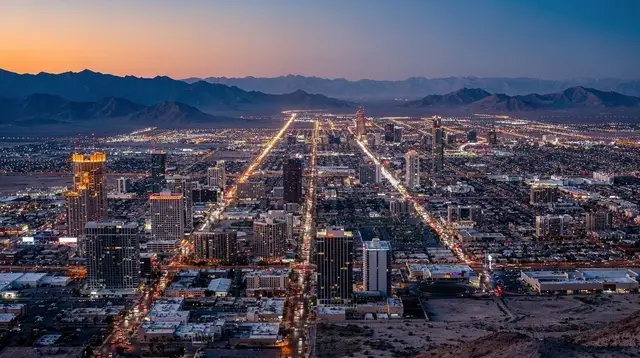
Las Vegas sits in the Mojave Desert, and from June through August that geography stops being a scenic backdrop and starts being the main planning constraint. Daytime highs in the city commonly reach 38-43°C (100-110°F), and in July and August they can spike near or above 45°C on the hottest days. Out at Death Valley, summer temperatures regularly exceed 49°C (120°F) — among the hottest readings recorded anywhere on Earth. None of this makes a summer visit impossible. It does mean the whole shape of a day needs to change: outdoor plans move to the early morning or evening, midday shifts indoors, and hydration stops being an afterthought.
This guide is specifically about that adjustment — not about whether to come to Las Vegas in summer, but about doing it without a heat-related medical problem. It applies most directly to anyone planning time at Red Rock Canyon, Valley of Fire, Zion National Park, or the Grand Canyon, and to anyone driving through Death Valley on the way to or from Los Angeles.
The numbers that matter
| Metric | Typical summer figure |
|---|---|
| Las Vegas daytime high, June-August | 38-43°C (100-110°F) |
| Las Vegas peak days, July-August | near or above 45°C (113°F) |
| Death Valley (Furnace Creek) daytime high | often above 49°C (120°F) |
| Recommended water for a half-day outside | 2-3 liters per person minimum |
| Highest-risk hours for outdoor exertion | roughly 11am-4/5pm |
| Safer hours for outdoor activity | before 9am, after 5-6pm |
Overnight lows in the city typically only drop to the high 20s°C (mid-80s°F) in peak summer, so there is little relief even after dark — another reason evening outdoor activity, while safer than midday, still calls for water and pacing.
Refuse to believe these three things
Before anything else, three claims worth stating plainly, because they get repeated casually and they are each wrong in a way that matters:
- A rental car’s air conditioning does not make the outdoors safe. It cools the cabin during the drive. The moment you step out at a viewpoint, a gas station, or a trailhead, you are back in full desert heat with no buffer, and that exposure adds up across a day of stops.
- Basic precautions reduce risk, they do not eliminate it. Carrying water and a hat lowers the odds of heat illness; it does not make heat stroke impossible, especially for anyone with existing health conditions, young children, or older travelers. Treat every hot-weather plan as a risk to be managed, not a risk that has been solved.
- No trail’s summer accessibility can be guaranteed in advance. Parks and land managers restrict or close specific trails during excessive-heat warnings, sometimes on short notice. A trail that was open last week, or that a blog post described as open, may not be open on the day you arrive.
Timing outdoor activity around the heat
The single most effective adjustment for a summer trip is shifting outdoor time to the edges of the day. Between roughly 11am and 4-5pm, direct sun combines with heat radiating back off pavement, rock, and sand to push conditions well past what is comfortable or safe for sustained activity — this is true at Red Rock Canyon, at Valley of Fire, on any exposed trail near the Grand Canyon South Rim, and inside Zion National Park, where canyon walls can trap heat rather than provide shade.
A practical summer schedule looks like this:
- Before 9am: hiking, scenic drives, photography at Valley of Fire or Red Rock — the Red Rock Canyon Scenic Drive: Timed-Entry Reservations Explained route works well as an early start, and short trails covered in Red Rock Canyon: Easy Short Hikes You Can Do From the Strip are far more manageable at dawn than at noon.
- 9am-5pm: indoor attractions, pools, museums, casino floors, or an air-conditioned drive with minimal time outside the vehicle.
- After 5-6pm: a second outdoor window as temperatures ease slightly — still hot, but more tolerable than midday, and often when desert light is at its best for photos.
For a longer day trip that unavoidably spans midday — the drive to Grand Canyon West or the Grand Canyon South Rim takes 2.5 and roughly 4.5 hours respectively — the goal shifts from avoiding all midday exposure to minimizing time spent outside the vehicle during the hottest stretch, saving longer stops at viewpoints for morning or late afternoon.
Hydration: the numbers, not just the advice
“Drink plenty of water” is true and also too vague to plan around. A more useful baseline: carry at least 2-3 liters of water per person for a half-day outdoors, and more for a full day of hiking or sightseeing at Zion, Bryce Canyon, or the Grand Canyon rim trails. That figure assumes light-to-moderate activity with regular shade breaks; hiking, especially anything covered in The Narrows Hiking Guide: Zion’s Riverbed Trail or Below the Rim: Hiking Bright Angel and South Kaibab at the Grand Canyon, pushes that number higher.
A few practical points:
- Plain water and electrolyte drinks or tablets work better together than either alone — heavy sweating in extreme heat depletes salts as well as fluid.
- Start hydrating before you leave the hotel, not once you feel thirsty. Thirst is a lagging signal in dry desert heat, where sweat evaporates fast enough that you may not notice how much fluid you are losing.
- Refill at every opportunity — visitor centers, gas stations, ranger stations — rather than assuming the bottles you started with will last the day.
- Alcohol accelerates dehydration. A day that includes hiking or extended outdoor time is not the day to pair with heavy drinking, even though casino bars and slot machines are an easy, air-conditioned option for later in the evening.
Recognizing heat illness
Heat exhaustion and heat stroke exist on a spectrum, and the difference matters. Heat exhaustion typically shows up as heavy sweating, dizziness, nausea, headache, and fatigue — uncomfortable but usually reversible with shade, water, and rest. Heat stroke is a medical emergency: symptoms include confusion, a sudden stop in sweating despite intense heat, a rapid pulse, and sometimes loss of consciousness. Anyone showing signs of confusion or has stopped sweating in extreme heat needs shade, cooling, water, and emergency medical attention immediately — this is not a situation to wait out.
Children, older travelers, and anyone with cardiovascular or respiratory conditions are at higher risk and should be watched more closely, with shorter outdoor windows and more frequent breaks than the general guidance above.
Death Valley: a special case
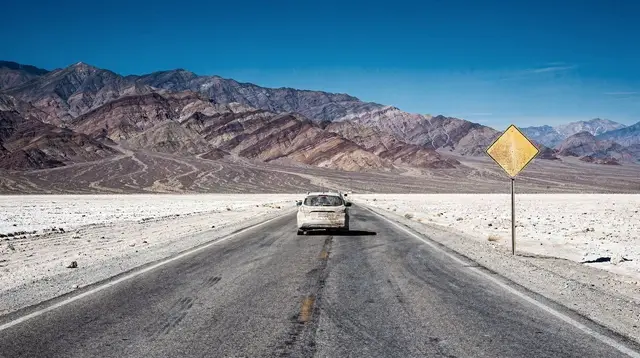
Death Valley deserves its own mention because its summer heat is genuinely extreme, not just uncomfortable. Furnace Creek regularly records daytime highs above 49°C (120°F) in July and August, among the hottest air temperatures measured anywhere on the planet.
A summer visit is possible with real preparation: a vehicle in good mechanical condition with working air conditioning, a full tank of fuel before entering the park (gas stations inside are sparse and expensive), extra water beyond what feels necessary, and a plan that keeps time outside the car to short stops at marked viewpoints rather than hiking. Guidance covered in Death Valley Driving Safety: A Self-Drive Guide from Las Vegas is worth reading in full before a July or August visit — this is not a park to attempt casually in peak summer, and it is not a place to break down.
Park closures and trail restrictions
Land managers at national and state parks around Las Vegas — the National Park Service at Zion and the Grand Canyon, Nevada State Parks at Valley of Fire, the Bureau of Land Management at Red Rock Canyon — can and do issue heat advisories that restrict or close specific trails during excessive-heat warnings, particularly exposed routes with little shade. These closures can happen with short notice and vary trail by trail rather than applying to an entire park.
The practical takeaway: check the relevant park’s official alerts page on the morning of your visit, not the week before. A trail that was open, or that a blog post described as accessible, is not guaranteed to be open on the day you arrive, especially during a heat wave. Building flexibility into a summer itinerary — a backup indoor activity, or a shorter alternate trail — avoids arriving at a trailhead only to find it closed.
Where to cool off during the day
The Las Vegas resort corridor is, somewhat conveniently, built around indoor spaces that stay heavily air-conditioned regardless of the temperature outside. Casino floors are free to walk through and open to anyone, making them a legitimate midday refuge between outdoor windows. Most Strip hotels also have pools for registered guests, and a poolside afternoon is a realistic way to fill the hottest hours of a summer day without giving up on being outside entirely.
Indoor attractions are another option worth building into a summer schedule — aquariums, museums, and immersive exhibits fill midday hours productively; see Immersive Exhibits and Experiences in Las Vegas and the Shark Reef Aquarium at Mandalay Bay: Complete Visitor Guide for specifics. For a break from the Strip entirely, an air-conditioned guided tour that limits outdoor exposure — such as an early-morning private day tour to Valley of Fire that gets you back before peak heat — handles both the timing and the driving logic for you.
Adjusting activities, not cancelling them
Summer heat is a reason to shift how an activity is done, not necessarily to skip it. A few examples:
- Desert driving and off-road activity: an early-departure guided desert ATV tour scheduled for morning hours avoids the worst of the afternoon heat while still delivering the off-road experience.
- Water-based activity: kayaking on the Colorado River near Hoover Dam stays notably cooler than a desert trailhead — a combo route like the guided biking and kayak combo tour or the guided Emerald Cave kayak tour makes good use of proximity to water during the hottest months.
- Hiking: swap a midday hike for an early one, or trade an exposed trail for a shorter, shaded alternative — see Easy Hikes Near Las Vegas: Short Desert Trails Under an Hour Away for lower-commitment options that still work in summer if timed for the morning.
- Photography: golden-hour light after 6pm at Valley of Fire is both more comfortable and often more photogenic than the harsh midday sun.
A realistic one-day summer plan
| Time | Activity |
|---|---|
| 6:00-9:00am | Outdoor activity — scenic drive, short hike, or early tour departure |
| 9:00am-12:00pm | Travel back, breakfast, or transition to indoor plans |
| 12:00-5:00pm | Pool, casino floor, indoor attraction, museum, or air-conditioned lunch and rest |
| 5:00-8:00pm | Second outdoor window — walking, photography, an evening tour |
| After 8:00pm | Dinner, shows, nightlife — still warm, but well below peak heat |
This structure applies whether the day is spent entirely on the Strip or heading out toward Red Rock Canyon or Valley of Fire; the principle — outdoor time at the edges, indoor time in the middle — holds regardless of destination.
Summer heat: quick reference
- Daytime highs of 38-43°C (100-110°F) are normal for June-August; 45°C+ spikes happen in July-August.
- Limit outdoor exertion to before 9am or after 5-6pm.
- Carry a minimum of 2-3 liters of water per person for a half-day outside, more for hiking.
- Avoid hiking at the Grand Canyon or Zion between 11am and 4pm in summer.
- Check official park alert pages the morning of your visit — trails can close on short notice during heat warnings.
- Casino interiors and hotel pools are the practical midday refuge.
- Death Valley in July-August requires real preparation: full fuel, working AC, minimal time outside the vehicle.
- No amount of preparation makes extreme heat risk-free — plan conservatively, especially for children, older travelers, and anyone with health conditions.
Las Vegas by Season
Verified deep-linked GetYourGuide tours. Book through these links and we earn a small commission at no cost to you.
GetYourGuide does not provide a product photo for this activity — the image shows the meeting point, photographed by us.