A few quiet blocks south of Fremont Street
Most first-time visitors to Downtown Las Vegas never make it past Fremont Street’s canopy of lights, and that is a reasonable choice — Fremont Street is the reason people come Downtown in the first place. But a short walk south, past the edge of the neon and the crowds, the streets quiet down and a different kind of neighborhood appears: the 18b Arts District, sometimes just called the Arts District or (confusingly to newcomers) grouped loosely with “Downtown” on maps and rideshare apps.
The name comes from its original footprint of about 18 blocks, though in practice the district that visitors actually experience is smaller than that — a handful of streets, chiefly around Main Street and Charleston Boulevard, where independent galleries, artist studios, vintage stores, and restaurants that have no connection to any casino brand sit side by side in a mix of converted warehouses, older commercial buildings, and the occasional mural-covered wall.
It is worth being direct about scale here: this is not a sprawling creative quarter on the order of a Wynwood in Miami or a Le Marais in Paris. It is a small, low-key pocket of a much larger city, and visitors who arrive expecting blocks upon blocks of galleries will be finished looking around well before they expected to be.
That modesty is also the appeal. After a day or two immersed in the engineered spectacle of the Strip — fountains timed to music, faux-Venetian canals, a volcano that erupts on schedule — the Arts District offers something the Strip does not: storefronts that were not designed by a resort’s marketing department, restaurants that are not leased to a corporate hospitality group, and art that is for sale because someone made it, not because it was commissioned to fill a casino hallway. It reads less like an attraction and more like an actual neighborhood, because that is largely what it is.
Getting there from the Strip or Fremont Street
The 18b Arts District sits just south of Downtown proper, roughly between Charleston Boulevard and the rail corridor, centered on a stretch of Main Street. From the Strip, it’s a 10-15 minute drive or rideshare depending on traffic and which resort you’re starting from — closer to 10 minutes from a Strip-adjacent hotel, closer to 20 from the far south end near the airport. From Fremont Street, it’s genuinely close: a 10-15 minute walk south along Main Street, or a very short taxi or rideshare hop if the September or July heat makes walking unappealing.
There is no dedicated shuttle or transit line built specifically for the district, and this is one of the few pockets of central Las Vegas where a car (your own, a rideshare, or a short taxi ride) genuinely helps, since the galleries and restaurants are spread across a few parallel streets rather than concentrated on one strip you can walk end to end without doubling back. Parking is generally easier and cheaper here than anywhere on the Strip — mostly free street parking and small lots, though spaces do fill up fast on First Friday evenings (more on that below).
Because it sits so close to Fremont Street, the most efficient way to see it is as an add-on to a Downtown day rather than a standalone trip. Visitors following a Downtown walking tour or spending a morning at the Mob Museum or the Neon Museum can reasonably tack on an hour or two in the Arts District afterward, especially if a meal is part of the plan.
What’s actually there
The district’s substance is in its galleries, studios, and a cluster of independent food and drink spots — not in any single marquee attraction. A short, honest list of what to expect:
- Independent galleries. A number of small, artist-run and commercial galleries occupy converted storefronts and warehouse spaces, showing local and regional work — painting, photography, sculpture, mixed media. Hours vary considerably by gallery, and several keep limited or appointment-based hours outside of First Friday, so a Tuesday afternoon visit may mean fewer doors are actually open than a Friday evening.
- Artist studios. Working studio space is part of the district’s identity, though studios are generally not open to casual walk-in visitors the way galleries are, except during organized events.
- Vintage and antique shops. A handful of secondhand and vintage stores add another reason to wander the side streets, particularly for visitors who enjoy browsing rather than checking off a list of sights.
- Murals and street art. Building walls and alleyways carry a rotating collection of murals, which change over time as buildings are repainted or repurposed — a reasonable stop for photographers, though again on the scale of a few walls and alleys, not a citywide open-air museum.
- Independent restaurants and coffee shops. This is arguably the district’s strongest daily draw: small, locally owned cafés, coffee roasters, and restaurants that have no relationship to a Strip resort’s food and beverage division. For visitors who have spent several days eating at casino buffets and resort restaurants, a coffee or lunch here can feel like a genuine change of pace.
None of this amounts to a full day’s itinerary, and it isn’t meant to. Two to three hours is a realistic, comfortable window to walk a few blocks, step into two or three galleries that happen to be open, browse a vintage shop, and sit down for a coffee or a meal. Visitors who budget half a day or more here, expecting a district on the scale of a major city’s arts quarter, will find themselves finished with time to spare — better to treat the extra hours as a chance to head back toward Fremont Street or start planning the next leg of the trip, whether that’s Red Rock Canyon or a longer excursion out toward Hoover Dam.
First Friday: the one night the district comes alive
The single event most associated with the 18b Arts District is First Friday, a monthly, generally free evening event that closes off some streets to traffic, brings out food trucks and live music, and gets most of the galleries to stay open later with special exhibitions or openings. It is by a wide margin the busiest and most atmospheric time to visit — the closest the district gets to feeling like a genuine festival rather than a quiet stroll.
A few practical notes for anyone timing a trip around it:
- It happens once a month, not every Friday — the name refers to the first Friday, and the schedule can shift around holidays or for other reasons, so always check the current calendar before making a special trip out to the district specifically for this event. Showing up on the wrong Friday means an ordinary, much quieter evening.
- It draws real crowds relative to the district’s small footprint. Because First Friday concentrates a lot of visitors into just a few blocks, parking gets noticeably harder and street parking fills early; arriving on foot from Fremont Street, or by rideshare with some walking at the end, is usually more practical than driving and hunting for a space.
- It’s free to attend, though individual galleries, food trucks, and vendors set their own prices, and it is worth bringing some cash for smaller vendors who may not take cards.
- It is still a small event geographically. Even on its busiest night, First Friday plays out across a handful of streets, not a citywide festival footprint — expect a lively couple of hours, not an all-night, multi-neighborhood affair.
Outside of First Friday, the district is genuinely quiet — which is either the appeal or the disappointment, depending on what a visitor is hoping for. Anyone wanting the liveliest possible version of the Arts District should specifically plan around a confirmed First Friday date; anyone wanting a calm, uncrowded wander through galleries and coffee shops should deliberately avoid it and come on an ordinary weekday or weekend afternoon instead.
Who this stop is for — and who should skip it
The 18b Arts District makes the most sense for visitors who have already spent meaningful time on the Strip or Fremont Street and are specifically looking for a lower-key counterpoint: less noise, less flashing signage, fewer slot machines, and a chance to see a side of the city that has nothing to do with the resort corridor. It also suits photographers chasing murals and street art, coffee enthusiasts looking for something other than a casino café, and anyone who simply enjoys browsing small independent galleries and shops without a fixed itinerary.
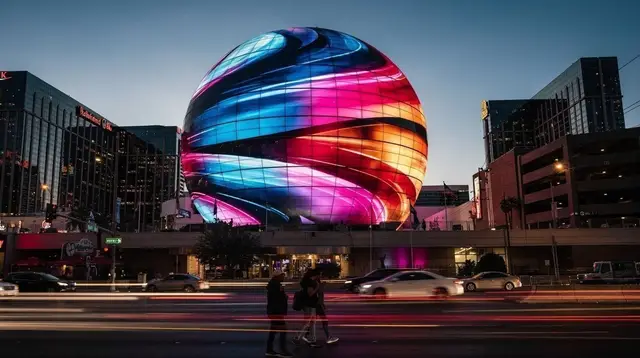
It is a poor fit for visitors on a tight first-time schedule who are prioritizing headline sights — the Bellagio Fountains, the Sphere, the Fremont Street Experience — since none of that is here, and the district’s own attractions are modest enough that a visitor expecting a “must-see” will likely leave unimpressed. It is also not the right stop for anyone traveling with very young children looking for entertainment, since there is little here built for kids specifically; families are generally better served by family-friendly attractions on the Strip.
For visitors weighing how much time to give Downtown overall against the rest of the city, the guide to deciding how many days to spend in Las Vegas and the comparison of the Strip versus Downtown are useful starting points — the Arts District is realistically an add-on to a Downtown day, not a reason on its own to add an extra night.
Pairing it with the rest of Downtown
Because the district sits so close to Fremont Street, most visitors fold it into a broader Downtown day rather than making a dedicated trip. A reasonable half-day sequence: start with the Neon Museum or the Mob Museum in the morning, walk or take a short rideshare down to Fremont Street for lunch and a look at the Fremont Street Experience canopy, then continue a few more blocks south into the Arts District for coffee, galleries, and a slower afternoon.
Anyone following a structured Downtown walking tour can simply extend the route south once the main Fremont Street sights are covered.
Evenings are a different story: after dark, the energy shifts back toward Fremont Street’s lights or the cocktail bars and speakeasies scattered around Downtown, since the Arts District itself is quiet at night outside of First Friday. A two-day Downtown-and-Strip visit, such as the one outlined in the Strip and Downtown two-day itinerary, can comfortably work the Arts District into a Downtown afternoon without derailing the rest of the plan.
Beyond the district: day trips from the same base
Visitors staying near Downtown for the Arts District, the Fremont Street Experience, or nearby Chinatown along Spring Mountain Road are also well positioned for day trips into the desert beyond the valley. A short drive southeast leads to Boulder City and Hoover Dam, where a guided outing such as a guided walk through Boulder City’s historic Hemenway Park makes an easy half-day pairing with a morning spent gallery-hopping.
Slightly further out, the old mining settlement of Nelson makes for an atmospheric contrast to the district’s contemporary art scene — a guided visit to Nelson Ghost Town with an optional mine tour trades studio storefronts for rusted machinery and desert history. For visitors who want to add some adrenaline to an otherwise slow-paced Downtown day, a guided off-road Bronco adventure out to Boathouse Cove on Lake Mead is a genuinely different kind of afternoon than anything the Arts District itself offers.
None of these tours start from the Arts District directly — they’re desert and lake excursions best booked for a separate half-day or full day — but they illustrate a useful planning principle for anyone based Downtown: the quiet, human scale of the Arts District pairs naturally with equally low-key, non-Strip excursions into the surrounding desert, rather than with the Strip’s bigger, more produced attractions.
Practical tips before you go
- Check gallery hours before a weekday visit. Several galleries keep limited hours outside First Friday, sometimes appointment-only — a Tuesday afternoon may mean more closed doors than open ones.
- Confirm the First Friday date on the official calendar rather than assuming it falls on the literal first Friday of the month; the schedule occasionally shifts.
- Wear comfortable shoes and expect heat outdoors for most of the year — see the summer heat guide for context on just how extreme Las Vegas summers get, since there is little shade between galleries.
- Bring cash for First Friday vendors, since not every food truck or small stall takes cards.
- Budget two to three hours, not a full day — arriving with modest expectations about scale is the single best way to enjoy this stop rather than feel let down by it.
- Combine it with Fremont Street or a nearby museum rather than treating it as a standalone destination; the district’s proximity to Downtown Fremont is its biggest practical advantage.
Frequently asked questions about the 18b Arts District
How big is the 18b Arts District, really?
Small. The name references roughly 18 original blocks, but the part visitors actually experience — galleries, studios, and restaurants clustered together — covers a handful of streets around Main Street and Charleston Boulevard. It is nowhere near the scale of a major city’s dedicated arts quarter, and most visitors can walk its core in well under an hour outside of stopping in shops and galleries.
How far is the Arts District from the Strip and from Fremont Street?
From the Strip, expect a 10-15 minute drive or rideshare depending on which resort you start from and traffic conditions. From Fremont Street, it’s close enough to walk — roughly 10-15 minutes south along Main Street — or a very short rideshare or taxi ride if the heat or time makes walking impractical.
What is First Friday and do I need to plan around it?
First Friday is a monthly, generally free evening event when several streets close to traffic, galleries stay open later, and food trucks and live music fill the district. It happens once a month, not every week, so check the current calendar before making a trip specifically for it. Outside of First Friday, the district is much quieter, which suits visitors who prefer calm browsing over crowds.
How much time should I set aside for the Arts District?
Two to three hours is realistic for walking the core streets, stepping into a few open galleries, browsing a vintage shop, and having a coffee or meal. Visitors expecting a full day’s worth of sights here will likely finish well ahead of schedule.
Is the 18b Arts District worth visiting on a first trip to Las Vegas?
It’s a reasonable add-on for a Downtown day, but it isn’t essential on a tight first-time itinerary focused on the Strip’s headline attractions. It suits repeat visitors or anyone specifically looking for a quieter, non-casino counterpoint more than someone prioritizing must-see sights.
Can I walk between the Arts District and Fremont Street?
Yes — it’s roughly a 10-15 minute walk between the two, making it easy to combine both in one Downtown outing. In Las Vegas summer heat, though, a short rideshare may be more comfortable than the walk, especially in the middle of the day.
Are there restaurants and coffee shops in the district that aren’t tied to a casino?
Yes, and this is one of the district’s main draws — independent cafés, coffee roasters, and restaurants with no connection to Strip resort brands. It’s a genuine change of pace for visitors who have spent several days eating at resort restaurants and buffets.
Is the Arts District comparable to Wynwood in Miami or Le Marais in Paris?
No, and it’s worth setting that expectation clearly. Those are large, well-established arts and culture districts spanning many more blocks and a longer history of investment. The 18b Arts District is a modest, several-block pocket of independent galleries and studios — worth a couple of hours, not a comparable full-scale arts quarter.