Mob-Era Downtown Las Vegas: A Walking History
Can you still see mob-era Downtown Las Vegas today?
Yes. Several buildings and facades from the 1940s-1960s casino boom still stand around Fremont Street and Fremont East, including the Golden Nugget and El Cortez exteriors. Walking the block is free; the documented history involves organized-crime financing and the 1950s Kefauver Committee hearings, not sensational anecdotes.
Before the Strip, There Was Fremont Street
Long before the Strip existed as a resort corridor, Fremont Street was Las Vegas’s downtown — the paved commercial spine of a small railroad town in the Mojave Desert. Nevada legalized casino gambling in 1931, and the first licensed casinos clustered here, not on the two-lane highway south of town that would later become Las Vegas Boulevard, the Strip. The El Cortez Hotel & Casino, which opened in 1941, is still standing today and is one of the oldest continuously operating casinos in Las Vegas. Its low-slung, Spanish Colonial Revival exterior on Fremont Street is one of the few pieces of that pre-war streetscape you can still see with your own eyes rather than in a photograph.
This guide focuses on the physical, walkable history around Downtown and Fremont Street during the 1940s through 1960s — the buildings and street layout, and the documented facts about who financed them and how the state eventually responded. It is not a substitute for the Mob Museum, the dedicated ticketed institution a few blocks away that houses artifacts, courtroom records and exhibits in far more depth than a street walk can cover. Think of this page as the context you bring with you before or after that visit, and as a self-guided route past what remains outside its walls.
The Money Behind the Neon
Nevada’s gambling industry grew up fast in a state with a tiny population and little established banking infrastructure for an enterprise most conventional lenders would not touch. That gap was filled, in well-documented cases, by financing connected to organized crime figures from Los Angeles, Chicago, Cleveland and New York, who saw a legal gambling market as a natural extension of the illegal operations they already ran elsewhere. This is not a matter of rumor: it was the explicit subject of the U.S. Senate hearings described further below, and it has been documented since in court records, journalism and the exhibits at the Mob Museum itself.
Two Downtown properties are commonly cited in that history. The Golden Nugget, which opened in 1946, was built by a group of investors that included figures with prior gambling operations in California, at a moment when the state’s gaming licensing process was still informal by later standards.
Binion’s Horseshoe, founded in the late 1940s by Benny Binion, traces to an owner who arrived in Las Vegas with a well-documented gambling and legal history from Dallas, Texas, rather than to organized-crime financing from the East or West Coast syndicates — a distinction worth keeping straight, since Binion’s story and the Siegel/Cleveland-syndicate story are often folded together in casual retellings when they were, in fact, separate strands of the same era.
Bugsy Siegel’s Short Downtown Chapter
Benjamin “Bugsy” Siegel is the name most associated with organized crime and early Las Vegas gambling, but his defining project — the Flamingo — was built south of the city limits, on the road that became the Strip, not on Fremont Street. His connection to Downtown itself is narrower and shorter than popular retellings sometimes suggest: records show Siegel and associates held a stake in the El Cortez for a brief period in 1945, buying in and then selling out within the same year, before he shifted his focus to the Flamingo project that would make his name.
That brevity is itself a useful fact to carry on a walk down Fremont Street: the El Cortez’s mob-era connection is real and documented, but it was a short chapter in a building that has otherwise operated continuously, under different ownership, for more than eight decades. Treat any story that turns this into an extended Siegel saga on Fremont Street with the same skepticism you would want a “based on a true story” film credit to earn.
The Kefauver Committee Comes to Nevada
By 1950, organized crime’s reach into American gambling — legal and illegal — had become a national political issue. The U.S. Senate formed the Special Committee to Investigate Crime in Interstate Commerce, chaired by Senator Estes Kefauver of Tennessee, and held televised hearings in more than a dozen cities across 1950 and 1951. The committee’s investigation examined, among other things, the flow of money into Nevada’s licensed casino industry from figures with organized-crime backgrounds, and its final report put that connection on the public record in a way that earlier newspaper reporting had not managed on the same scale.
The practical consequence in Nevada arrived a few years later: state lawmakers, under mounting federal and public pressure, created the Gaming Control Board in 1955 as a dedicated regulatory body, followed by the Nevada Gaming Commission, to license operators and audit casino finances more rigorously than the informal municipal and county licensing that had governed Downtown’s early casinos. It’s a slower, more bureaucratic ending than the era’s own mythology often implies, but it’s the one supported by the record: regulation, not a single raid or arrest, is what gradually pushed organized-crime financing out of licensed Nevada gambling over the following two decades.
Walking the Block: What’s Still There
A short walk covers most of what remains visible from this period, and it costs nothing beyond the time it takes.
| Stop | What it was | What’s there now |
|---|---|---|
| El Cortez Hotel & Casino | Opened 1941; briefly co-owned by a group including Bugsy Siegel in 1945 | Original exterior largely intact; still an operating casino-hotel |
| Golden Nugget | Opened 1946, financed by investors with prior California gambling operations | Rebuilt and expanded many times since; footprint and Fremont Street frontage remain in the same location |
| Binion’s Horseshoe | Founded by Benny Binion in the late 1940s | Building still operates under the Binion’s name on Fremont Street |
| Fremont Street corridor | The city’s original casino strip, pre-dating the Strip | Now covered by the Fremont Street Experience canopy, added in 1995 |
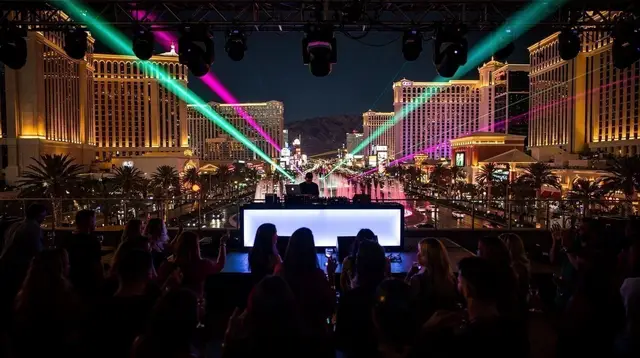
None of this requires a ticket to see. The Fremont Street Experience canopy overhead — the LED light-and-sound show that now defines the street after dark — is a 1990s addition built over the historic block, which is itself a useful way to picture how much has layered on top of the original streetscape: you are looking at 1940s building footprints under a 1990s roof, in a district that keeps reinventing its surface while the ground floor underneath stays surprisingly constant.
For context on where this era’s history is preserved in depth rather than glimpsed from the sidewalk, the Mob Museum sits a few blocks from Fremont Street in the former federal courthouse and post office building — itself tied to the era, since it hosted one of the Kefauver Committee’s own hearings in 1950. The museum handles its own ticketing, exhibits and hours; nothing in this guide substitutes for checking those details directly before you go.
What’s Changed, and What a Casual Look Won’t Tell You
Fremont Street today is a pedestrian mall under a light canopy, lined with casinos, bars and street performers — a very different visual experience from the exposed, car-lined commercial street of the 1940s and 1950s. That makes it easy to romanticize what you’re looking at without registering how much has been rebuilt: most interiors have been renovated multiple times since the mob era, and several buildings from that period no longer exist at all, replaced by later construction. What survives is mostly building footprints, some original facades, and the street grid itself, rather than intact 1940s interiors you could tour as a time capsule.
It’s also worth being precise about geography while you’re here: Fremont Street and the surrounding blocks are genuinely inside the city of Las Vegas, unlike the resort corridor several miles south, most of which sits in unincorporated Clark County rather than the city proper. Downtown’s mob-era history and the Strip’s mob-era history (Siegel’s Flamingo among them) are geographically and, in several cases, financially distinct stories that happen to share a decade and a handful of names.
Seeing It With a Guide
Walking the block on your own with this page as reference costs nothing and takes under an hour. If you’d rather have a local guide narrate the history and point out details a first-time visitor would miss, a few operators run themed walks through this same stretch of Downtown. A guided walking tour of Downtown with a local guide typically covers this history alongside the neon and architecture of the district, and a dedicated Fremont Street walking tour sticks closer to the historic core described above.
For an after-dark option once the canopy lights are running, a 90-minute evening Segway tour of Downtown covers more ground in less time. French-speaking visitors can book a Downtown Las Vegas walking tour conducted in French. Prices and exact routes vary by operator and season, so check current details before booking rather than assuming a fixed rate.
None of these guided options are required — the walk described above is entirely doable without one, using nothing but this page and the sidewalk. What a guide adds is narration, local anecdotes framed as such rather than as fact, and the convenience of not having to look up which building is which as you go.
Planning the Rest of Your Downtown Visit
This mob-era walk pairs naturally with other things to see around Fremont Street and the wider Downtown and Fremont Street area, from the Neon Museum’s collection of retired signage — some of it from casinos with their own mid-century histories — to the Atomic Museum, which covers a different but overlapping strand of 1950s Nevada history.
Visitors specifically drawn to the crime angle can also look at Downtown ghost tours and true-crime film location tours, which cover related but distinct ground — folklore and film locations rather than the financial and regulatory history this page focuses on. For a broader sense of what falls under this theme across the city, the mob history category page rounds up the related guides in one place, and the ghosts, mob and true crime category lists bookable experiences in the same vein.
If you’re building out a full Downtown day, an itinerary covering the Strip and Downtown across two days gives this walk a natural slot, typically in the late afternoon before Fremont Street’s evening light show gets underway. And if you’re still weighing where to base yourself, it’s worth reading how Downtown compares to the Strip as a place to stay — a genuinely different atmosphere and price point from the resort corridor most first-time visitors picture when they think of Las Vegas.
Mob-Era Downtown Las Vegas: Frequently Asked Details
Is this the same as visiting the Mob Museum?
No. This is a self-guided walk past Downtown’s historic exteriors and streetscape. The Mob Museum is a separate, ticketed institution housed in the former federal courthouse, with its own dedicated exhibits and admission fees — see the Mob Museum guide if you want the indoor museum experience.
Was Bugsy Siegel connected to Downtown Las Vegas?
Briefly. Records show Siegel and associates held a stake in the El Cortez Hotel & Casino for a short period in 1945 before he moved his attention to building the Flamingo on what became the Strip. His lasting reputation is tied far more to the Strip than to Fremont Street.
What was the Kefauver Committee?
The Senate Special Committee to Investigate Crime in Interstate Commerce, chaired by Senator Estes Kefauver, held televised hearings across the United States in 1950-1951. Its findings on organized crime’s reach into casino financing were part of the pressure that led Nevada to create a formal state gaming regulator in the mid-1950s.
Which Downtown buildings from that era are still standing?
The Golden Nugget (opened 1946) and El Cortez (opened 1941) both retain recognizable exteriors on or near Fremont Street, and Binion’s Horseshoe traces back to Benny Binion’s casino founded in the late 1940s. Interiors have been renovated repeatedly, so what you see today is the facade and street footprint more than the original room.
Is walking this route free?
Yes, walking Fremont Street and Fremont East costs nothing. Some companies sell themed guided walks that add narration and context; those have separate, variable prices you should check directly with the operator before booking.
Is it safe to walk Downtown Las Vegas at night?
Fremont Street itself is well lit, patrolled and busy most evenings, similar to the Strip. Fremont East and the side streets a few blocks out are quieter after dark; the general precautions that apply to any downtown entertainment district apply here too.
How long does a self-guided mob-era walk take?
Covering the core stretch of Fremont Street and a short detour past the El Cortez and Fremont East typically takes 45 minutes to just over an hour at an easy pace, before any stops for food, photos or a casino floor.
Downtown Las Vegas History Tours
Verified deep-linked GetYourGuide tours. Book through these links and we earn a small commission at no cost to you.
GetYourGuide does not provide a product photo for this activity — the image shows the meeting point, photographed by us.