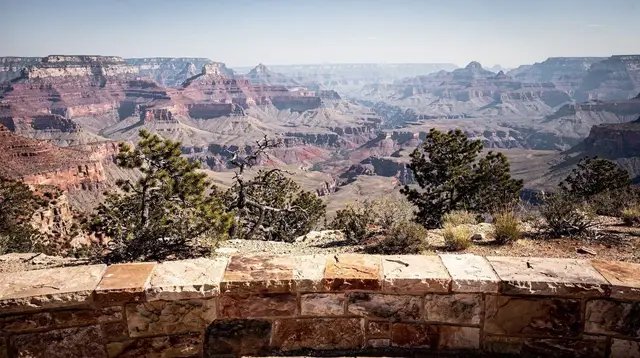
Zion National Park Day Trip from Las Vegas
Can you visit Zion National Park on a day trip from Las Vegas?
Yes. Zion is about 170 miles (270 km) from Las Vegas, roughly 2 hours 45 minutes one way on I-15 north, which makes it a workable round trip unlike the Grand Canyon South Rim. Budget 6-7 hours inside the park for a solid but non-strenuous visit, and remember Utah runs on Mountain Time, an hour ahead of Las Vegas.
Why Zion works as a day trip when the Grand Canyon doesn’t
Of all the big national park names within reach of the Las Vegas Strip, Zion National Park is the one that genuinely fits into a single day without feeling rushed into a car for most of it. The drive is about 170 miles (270 km) one way, roughly 2 hours 45 minutes on I-15 north through the edge of the Mojave Desert and into red-rock southern Utah, passing through St. George on the way. Compare that to the Grand Canyon South Rim, which sits close to 4.5 hours away and effectively demands an overnight to do properly. Zion, by contrast, can be a there-and-back day, with real time left over to walk a trail or two inside the park.
That said, “day trip” doesn’t mean “quick stop.” Once you add the drive both ways, a fuel and coffee break, and the reality of the park’s own internal shuttle system, you’re looking at a 12-13 hour day door to door from a Strip hotel. This guide sets realistic expectations for the drive, the money, the shuttle, and what you can and can’t fit in before dark.
The drive: I-15 north, and a detail most visitors miss
The route itself is simple: I-15 north out of the Las Vegas Valley, through the Virgin River Gorge in the Arizona strip, past St. George, then east on UT-9 toward Springdale and the park’s south entrance. It’s mostly interstate, so the driving is easy compared with the two-lane, partly unpaved approach to Grand Canyon West.
The detail that trips people up isn’t the road, it’s the clock. Nevada runs on Pacific Time, but Utah runs on Mountain Time, so the moment you cross the state line, effectively you lose an hour. Leave Las Vegas at 6:00 AM Pacific and you arrive at 6:00 AM Pacific / 7:00 AM Mountain elapsed drive time later, meaning your actual watch reads later than you’d instinctively assume. This matters for two concrete things: any timed shuttle reservation inside the park, and any pickup time quoted by a tour operator, since a mismatch of an hour is enough to miss a morning departure slot or a permit window. Double-check whether a quoted time is Pacific or Mountain before you commit to it, especially for anything booked online.
What it actually costs in 2026
Zion’s standard entrance fee is $35 per vehicle, valid for 7 consecutive days — unchanged in structure from previous years. What has changed for 2026 is a new $100 per-person surcharge that applies specifically to non-U.S.-resident visitors aged 16 and over, introduced on January 1, 2026. This is on top of, not instead of, the vehicle fee, and it applies per person in the vehicle, not per vehicle.
| Fee type | Cost (2026) | Applies to |
|---|---|---|
| Standard vehicle entry (7-day) | $35 | Every vehicle entering |
| Non-resident visitor surcharge | $100 per person | Non-U.S. residents aged 16+ |
| America the Beautiful pass (non-resident) | $250 | Covers entry fees at multiple federal sites for a year |
For a single international visitor in a car, that surcharge alone can roughly triple the cost of the visit compared to the vehicle fee. The $250 non-resident annual pass only pencils out if you’re visiting several parks or federal recreation sites during your trip — for one Zion visit alone, paying the surcharge directly is usually cheaper. Don’t assume the surcharge doesn’t apply to you just because you’ve read about the classic $35 fee in older material; as of this year, it’s a separate and additional line item for most international travelers.
The shuttle: mandatory, free, and sometimes slow
During Zion’s shuttle season, which covers the busiest parts of the year, private vehicles are not allowed on the Zion Canyon Scenic Drive — the road that leads to most of the park’s signature stops, including the trailheads for The Narrows and the base of Angels Landing. Instead, everyone rides the park’s own shuttle, which is free to use once you’ve paid the entrance fee.
The shuttle is efficient once you’re on it, but the visitor center parking lot and shuttle queue can back up significantly in the first couple of hours after sunrise, especially in spring and summer when the park is at its busiest. Arriving early — genuinely early, not “after breakfast” — is the single best thing you can do to protect your time budget for the day. A late-morning arrival can mean losing 45 minutes to an hour just waiting in line before you’ve seen anything.
Rental car vs. organized tour
Both options get you to Zion; they solve different problems.
A rental car gives you full control of departure time and route, and it lets you detour to spots an organized tour typically skips, such as Checkerboard Mesa near the east entrance or the separate Kolob Canyons section in the park’s northwest corner, which has its own entrance off I-15 and a completely different, quieter feel from the main canyon. The tradeoff is that you’re still bound by the shuttle rule once you reach Zion Canyon itself — a rental car doesn’t exempt you from that, since personal vehicles simply aren’t allowed on the Scenic Drive during shuttle season regardless of who’s driving.
An organized tour, such as the Zion National Park: Hike and Drive option, handles the highway driving, parking logistics, and often includes a guided walk on one of the easier trails, which takes the planning off your hands entirely. It’s a reasonable choice if you’d rather not do a 5-hour round-trip drive yourself in a single day, or if you’re traveling solo and want to split transport costs with a group. Just remember: “tour” here covers transport and possibly a guided walk, not a personal shuttle bypass — once inside the canyon, tour groups use the same park shuttle as everyone else.
For travelers who want a guided hiking-focused day without renting anything, the From Springdale Zion National Park Scenic Hiking Tour starts from the gateway town of Springdale itself, which suits anyone who’s already found their own way as far as the park’s doorstep. If cycling appeals more than walking, the From Springdale Zion National Park Bike Tour covers some of the same scenic ground from a bike seat instead.
A realistic day: what fits in 6-7 hours on the ground
Once you subtract driving time from a single day, you’re typically left with around 6-7 hours actually inside the park — enough for a genuinely good visit, but not enough for the long backcountry routes Zion is famous for among serious hikers.
What fits comfortably:
- A full shuttle loop past the main viewpoints — Zion Canyon’s most photographed stops are all shuttle-accessible.
- One or two shorter, well-marked trails — think Riverside Walk or the lower stretch of Emerald Pools, both manageable in a couple of hours round trip.
- Time at the visitor center and a proper lunch stop in Springdale, right at the park’s entrance.
What doesn’t realistically fit without extending into an overnight:
- The Narrows as a full wade upstream, which is a half-day commitment on its own.
- Angels Landing, which brings its own hard requirement below.
- A side trip to Kolob Canyons, unless you’re willing to sacrifice time in the main canyon to see it.
The Angels Landing permit trap
Angels Landing is the single most photographed hike in Zion, and it’s also the one most likely to derail an unprepared day-trip plan. Since 2022, hiking the chain section of Angels Landing has required a permit obtained through the National Park Service’s own lottery system — either a seasonal advance lottery or a day-before drawing — and permits are limited and competitive, especially in peak months. There is no way to simply show up, buy a ticket at the gate, or add it on through a tour operator on short notice. If you haven’t secured a permit well before your trip, plan your day around other trails and treat Angels Landing as something to revisit on a future, dedicated visit rather than something to chase on the fly.
Don’t confuse Zion with Bryce Canyon
Zion and Bryce Canyon are both major national parks in southern Utah, both reachable from Las Vegas, and both frequently mentioned in the same breath — but they are separate parks, roughly another hour and a half apart from each other beyond the drive from Las Vegas to Zion. Trying to do both in a single day from the Strip means well over 10 hours of driving alone, on top of any time spent actually seeing either park, which leaves almost nothing for the parks themselves.
If both are on your list, the more sensible approach is either picking one for a focused day trip, or building a proper multi-day route — the Zion & Bryce Canyon 2-day itinerary is built around exactly that pairing, and travelers who want to add Antelope Canyon into the same loop can look at the Las Vegas: Zion Bryce Canyon Antelope Canyon 2 Day Tour, which packages all three across two days rather than forcing them into one.
Alternative ways to experience the area
Not every visit to greater Zion has to center on hiking. For travelers looking for something more adrenaline-driven near the park’s gateway towns, options like the Zions National Park Area Giant Zipline Ropes Course offer a different way to take in the landscape from just outside the park boundary itself, without needing a permit or a shuttle ticket at all.
Planning your departure time
Because of the Pacific-to-Mountain time shift, working backward from a desired arrival time is more reliable than working forward from a departure time. If you want to be on the first shuttle of the morning, leave the Strip no later than 5:00-5:30 AM Pacific to allow for the 2 hours 45 minute drive, a fuel or bathroom stop, and the walk from parking to the shuttle stop. Leaving later pushes you into the busier mid-morning shuttle queues and eats directly into the 6-7 hours you have on the ground.
For the return leg, budget the same 2 hours 45 minutes, and remember you’re gaining the hour back crossing from Mountain back to Pacific time — a small consolation after a long day, but useful if you’re timing a dinner reservation or show back on the Strip for that evening.
Practical checklist before you go
- Confirm whether you need the America the Beautiful non-resident pass or the standard entry plus surcharge based on your nationality and how many parks you’re visiting.
- Check the park’s current shuttle season dates before you go — outside shuttle season, private vehicles may be allowed on the Scenic Drive, changing your logistics.
- Fill your gas tank in Las Vegas or St. George; services thin out past the park entrance.
- Bring more water than feels necessary — the desert climate around Zion is dry even outside the hottest months, and see our desert driving safety tips for the drive itself.
- If Angels Landing matters to your trip, apply for the permit lottery well before you travel, not on arrival.
Frequently asked questions about a Zion day trip from Las Vegas
How far is Zion National Park from Las Vegas?
About 170 miles (270 km) one way, roughly 2 hours 45 minutes of driving via I-15 north through St. George, Utah. That makes it far more feasible as a single-day round trip than the Grand Canyon South Rim, which is closer to 4.5 hours each way.
Does the time change between Las Vegas and Zion matter?
Yes. Nevada runs on Pacific Time and Utah runs on Mountain Time, so Zion is effectively an hour ahead of Las Vegas year-round. Factor this into any timed shuttle reservation, tour pickup, or planned return time, or you can arrive later than expected without realizing it.
What does it cost to enter Zion National Park in 2026?
The standard entrance fee is $35 per vehicle, valid for 7 days. As of January 1, 2026, a new $100 per-person surcharge also applies to non-U.S.-resident visitors aged 16 and over, on top of the vehicle fee. The America the Beautiful non-resident pass, priced at $250, can offset this cost only if you are visiting multiple parks.
Do I need to take a shuttle inside Zion Canyon?
During the park’s shuttle season, private vehicles are not permitted on the Zion Canyon Scenic Drive, and the free park shuttle is the only way to reach most of the canyon’s main viewpoints and trailheads. Lines can build up quickly at the visitor center in the morning, so plan for a wait.
Is it better to rent a car or book an organized tour to Zion?
A rental car gives you control over timing and lets you detour to spots like Checkerboard Mesa or the Kolob Canyons section, which most group tours skip. An organized van tour covers the highway driving and drop-off logistics, but you still ride the park’s own shuttle once inside Zion Canyon, since tour vehicles are not exempt from that rule.
Can I hike Angels Landing on a day trip from Las Vegas without planning ahead?
No. Angels Landing requires a separate permit obtained through a seasonal lottery or day-before drawing, and it is not something a day-trip itinerary can guarantee. Treat it as a bonus only if you have already secured a permit before you travel, not as a default part of the plan.
Is Zion the same trip as Bryce Canyon?
No. Bryce Canyon is a separate national park roughly another hour and a half beyond Zion, also in Utah. Combining both in a single day from Las Vegas is an extremely long day; most travelers either choose one park for a day trip or plan a multi-day loop that covers both.
Zion National Park Day Trips
Verified deep-linked GetYourGuide tours. Book through these links and we earn a small commission at no cost to you.
GetYourGuide does not provide a product photo for this activity — the image shows the meeting point, photographed by us.