Las Vegas Chinatown: The Spring Mountain Road Food Guide
Where is Las Vegas Chinatown and how do you get there?
Las Vegas Chinatown runs along Spring Mountain Road about 10-15 minutes west of the Strip by car or rideshare. It is not a single site but a string of separate shopping plazas, including Chinatown Plaza, spread over roughly a mile and a half. There is no tram or monorail connection, and walking from the Strip is not realistic given the distance and Nevada's summer heat.
Most visitors to Las Vegas never leave the resort corridor, and most of what they eat there is priced and portioned for that corridor. A few miles west, along a stretch of road most tourists never see, is a different version of the city’s food scene entirely: a working, everyday district built around Chinese, Vietnamese, Korean, Filipino, and Japanese kitchens, Asian grocery stores, and strip-mall bakeries that have nothing to do with buffet lines or casino floors. Locals just call it Chinatown. It sits on Spring Mountain Road, and getting the logistics right matters more here than at almost any other stop in this guide.
What “Las Vegas Chinatown” actually is
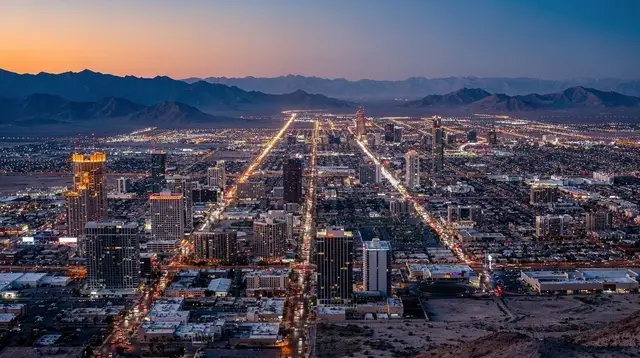
Unlike the compact, single-street Chinatowns of San Francisco or New York, Las Vegas’s version is a corridor, not a neighborhood you can see end to end. It runs along Spring Mountain Road, largely between roughly Valley View Boulevard and Jones Boulevard, an area officially recognized by the state as the “Chinatown” business district since the 1990s. The anchor is Chinatown Plaza, a shopping center with a distinctive pagoda-style gate that was the original catalyst for the district when it opened in the early 1990s, but it is far from the only stop.
From there, the district spreads across a series of separate strip-mall plazas strung along Spring Mountain Road for roughly a mile and a half, each with its own parking lot, its own mix of restaurants, and no shared walkway connecting them. Some visitors expect a single walkable block similar to a downtown historic district; what they find instead is a sequence of shopping centers you drive or rideshare between, parking at whichever one has your destination restaurant. That’s a normal, functional layout for this kind of suburban retail corridor — it’s just worth knowing in advance so you plan for short car or rideshare hops between plazas rather than a stroll.
Inside those plazas, the range of cuisine is genuinely broad: Chinese regional cooking, Vietnamese pho and banh mi shops, Korean barbecue and hot pot, Filipino restaurants, Japanese ramen and izakaya spots, plus Asian supermarkets, bakeries, boba tea shops, and karaoke lounges. Because restaurant lineups in any strip-mall district turn over between the time a guide is written and the time you visit, this page won’t hand you a fixed list of names to expect open — check current listings or a map app before you go, rather than planning around a specific restaurant that may since have closed or changed hands.
Getting there: no walking, no tram
This is the detail that trips up first-time visitors most: there is no realistic way to walk to Chinatown from the Strip. Spring Mountain Road sits west of Interstate 15, several miles from the central Strip resorts, with no continuous, shaded pedestrian route connecting the two. Nevada’s summer heat, which regularly reaches 38-43°C (100-110°F) from June through August, makes an attempted walk not just unpleasant but genuinely risky — this is not a corridor to underestimate on foot at any time of year, but especially not in summer.
None of the Strip’s people-moving systems reach Chinatown either. The paid Las Vegas Monorail runs behind the east side of the Strip, from MGM Grand up to the Sahara — the wrong direction entirely. The free casino-to-casino trams (Mandalay Bay-Luxor-Excalibur, and Park MGM-Aria-Bellagio) only connect neighboring resorts on the Strip itself. And the RTC Deuce and SDX buses, which do run the length of the Strip and to Downtown, don’t extend out to Spring Mountain Road either.
That leaves three practical options:
| Option | Approximate time from central Strip | Notes |
|---|---|---|
| Rideshare (Uber/Lyft) or taxi | 10-15 minutes | Simplest for a single visit; no parking to manage |
| Rental car | 10-15 minutes | Worth it if pairing Chinatown with Red Rock Canyon or other west-side stops |
| Guided food tour | Varies by itinerary | Transport, route, and some tastings handled for you |
Traffic on Spring Mountain Road and the connecting arterials can stretch that drive time during peak hours, so treat 10-15 minutes as a baseline rather than a guarantee, especially around evening rush and weekend dinner hours.
What it costs, honestly
One of the clearest reasons visitors make the trip is price. Restaurants along Spring Mountain Road are not paying Strip rent, Strip resort fees, or Strip staffing costs, and menu prices generally reflect that: a comparable meal tends to cost noticeably less here than the equivalent order at a Strip restaurant or buffet.
That said, this guide won’t hand you an invented average price per meal — costs vary widely by cuisine, restaurant, and how you order (a quick banh mi and a sit-down Korean barbecue dinner are not the same budget), and any specific number would be a guess dressed up as data. The honest takeaway is directional: expect meaningfully lower prices than the Strip for similar quality and portion size, and check a current menu before you commit if budget is tight.
A useful way to structure the visit
Because the district is spread across multiple plazas rather than one walkable block, a loosely planned visit tends to work better than an ambitious multi-stop itinerary on foot. A few approaches:
- Pick one plaza and stay there. Chinatown Plaza alone has enough variety — a market, several restaurants, a bakery — to fill a lunch or dinner without needing to move the car.
- Combine a meal with a grocery browse. The Asian supermarkets in the district (stocking ingredients, snacks, and prepared foods rarely found on the Strip) are worth fifteen minutes even if you’re not cooking, just to see the range.
- Let a guide handle the route. If navigating multiple plazas and deciding where to eat sounds like more logistics than you want on a short trip, a structured food tour removes that decision-making — someone else has already scouted the stops and built in tastings, and you’re not driving between parking lots yourself.
For that last option, the guided Chinatown food tour that visits five stops across the district is built specifically around this corridor’s scattered layout, moving you between plazas so you sample a range of cuisines without managing the driving or the decision fatigue of picking a single restaurant. It’s a reasonable way to see more of the district in one outing than most solo visitors manage on their own.
If your appetite for a guided food outing extends to Downtown instead, the guided walking food tour through Downtown Las Vegas covers a completely different, much older part of the city on foot — useful context if you’re deciding which side of town better fits your itinerary, since Downtown is genuinely walkable in a way Spring Mountain Road is not.
Two more general options worth knowing about if street food and casual bites are the priority for your trip overall: the street food tour led by a local guide, which surveys casual eating options with someone who knows current openings and closures, and, for evenings that lean toward drinks rather than dinner, the guided cocktail crawl through the Fremont Street area, which pairs well as a separate outing if you’re building a day around Downtown rather than Chinatown.
Fitting Chinatown into a broader Las Vegas visit
Spring Mountain Road sits on the western side of the valley, which makes it a workable stop if you’re also heading toward Red Rock Canyon or Summerlin — both roughly in the same direction from the Strip — rather than a detour that only makes sense on its own. If your day already includes a drive west, adding a Chinatown meal before or after costs relatively little extra time.
If a full day out west is on your itinerary anyway, Chinatown works well bookending it. Drivers heading out for short hikes around Red Rock Canyon in the morning, or a cool-weather escape up Mount Charleston, often pass close enough to Spring Mountain Road that a return-trip dinner adds only a small detour rather than a separate outing. Since none of these stops are served by rideshare-friendly loops the way Strip attractions are, if you’re stacking more than one of them in a day, renting a car for that day usually works out cheaper and more flexible than repeat rideshare fares.
If your trip is very short, though, weigh it honestly: a round trip adds at least 20-40 minutes of driving or rideshare time on top of however long you spend eating, which is time not spent on the Strip itself. For a one- or two-night stay built entirely around Strip attractions and shows, that trade-off may not be worth it. For anything longer, or for travelers who specifically want a break from Strip pricing and Strip crowds, it’s one of the better uses of a few hours outside the resort corridor.
Compare this to other food-focused ways to spend an evening in the city: the Strip food tour guide covers tastings within the resort corridor itself, useful if you’d rather stay close to your hotel, while the Las Vegas buffet guide and brunch guide both stay on-property. None of these substitute for Chinatown’s specific strength — genuinely different, non-Strip cuisine at non-Strip prices — but they’re worth weighing against the extra travel time if your schedule is tight.
For getting oriented on transport options generally, including how rideshare pricing and availability compares to renting a car for excursions like this one, see the guide to getting around the Strip before you go.
Chinatown isn’t the only non-Strip food-and-culture pocket of the city, either. If you’re weighing where to spend a non-Strip evening, the Downtown/Fremont Street walking tour guide covers the other major alternative — older, walkable, and built around a different kind of nightlife — and the broader Strip vs. Downtown comparison lays out how the two differ if you’re deciding which fits your trip.
The Arts District walking tour guide covers a third off-Strip pocket, smaller and gallery-and-bar focused rather than food-focused, worth knowing about even if it’s not the same kind of stop as Chinatown. And if lower prices generally are the draw, the guide to Las Vegas on a budget covers more ways to trim costs beyond just where you eat.
Travelers building a short trip around exactly this kind of on-Strip/off-Strip split may find the Strip and Downtown two-day itinerary or the broader first-time Las Vegas three-day itinerary useful for seeing where a Chinatown detour would actually fit against everything else on the list.
Practical notes before you go
A few things worth confirming on the day, since none of them are fixed facts that hold true year-round:
- Hours vary by restaurant and by day of week. Many spots in the district skew toward dinner and late-night service, especially around karaoke lounges and hot pot restaurants, but don’t assume every restaurant keeps the same schedule.
- Parking is plaza-by-plaza, not a single shared lot — if you’re moving between two restaurants in different plazas, you’ll likely re-park rather than walk between them, even though the plazas sit close together along the road.
- Cash and card acceptance varies, as it does at any collection of independently owned restaurants; carrying a card as backup is sensible.
- Weekend evenings are busiest, particularly at well-known spots for hot pot and Korean barbecue — a weekday visit or an early dinner tends to mean shorter waits.
None of this requires much advance planning beyond confirming a ride there and back, and perhaps checking that your specific restaurant of interest is still open and serving the hours you expect. The bigger planning decision is really about time: Chinatown rewards a visitor with at least half an evening to spare, not someone squeezing in every Strip attraction on a 24-hour layover.
Frequently asked questions about Las Vegas Chinatown
Is Las Vegas Chinatown within walking distance of the Strip?
No. Spring Mountain Road sits west of Interstate 15, roughly 3-4 miles from the central Strip, with no continuous pedestrian route and no shade cover along most of the way. A rideshare, taxi, or rental car is the realistic option.
Is there a shuttle, tram, or monorail to Chinatown?
No. The Las Vegas Monorail runs behind the east side of the Strip and does not extend to Spring Mountain Road, and none of the free casino-to-casino trams go anywhere near it. Rideshare apps, a taxi, or a rental car are the only practical ways to get there.
How much does a meal cost in Chinatown compared to the Strip?
Menu prices in the Spring Mountain Road area are generally noticeably lower than a comparable meal on the Strip, since restaurants here are not carrying Strip rent and resort overhead. Exact averages vary widely by cuisine and restaurant, so it’s worth checking a current menu rather than relying on a fixed number.
Is Chinatown one place or several shopping centers?
It’s several separate plazas strung along Spring Mountain Road, not one compact block. Chinatown Plaza is the best-known and most historic, but the district spreads across multiple shopping centers over roughly a mile and a half, each with its own parking lot and mix of restaurants and shops.
What kind of food will I find there?
The corridor covers a wide range of East and Southeast Asian cuisines, including Chinese, Vietnamese, Korean, Filipino, and Japanese kitchens, along with Asian grocery stores, bakeries, boba shops, and karaoke lounges. The exact restaurant lineup changes over time, so it’s worth checking current listings before you go rather than expecting a fixed roster.
Do I need a car, or is rideshare enough?
Rideshare or taxi is enough for a single visit, since the district is really a strip of parking-lot plazas rather than a walkable neighborhood. If you’re combining Chinatown with other stops west of the Strip, such as Red Rock Canyon, a rental car adds flexibility.
Is Chinatown worth it for a first-time, short Las Vegas trip?
It depends on priorities. It’s a strong choice if a break from Strip prices and Strip crowds for a meal matters to you, but it adds a round trip of at least 20-30 minutes in traffic, which competes with time spent at Strip attractions if your visit is very short.
What’s the best way to plan a visit — lunch or dinner?
Either works, since the district isn’t built around a single show or timed activity the way many Strip attractions are. Some visitors prefer a slower weekday lunch to avoid the busier weekend dinner crowds at popular spots, but there’s no fixed rule and hours vary restaurant to restaurant.
Las Vegas by Season
Verified deep-linked GetYourGuide tours. Book through these links and we earn a small commission at no cost to you.
GetYourGuide does not provide a product photo for this activity — the image shows the meeting point, photographed by us.