Racing Experiences and Shooting Ranges in Las Vegas
How much do racing experiences and shooting ranges cost in Las Vegas, and can I book same-day?
A passenger ride-along lap typically starts around $100-150, while driving a supercar yourself for multiple laps commonly runs $500-1,000+. Entry-level shooting packages generally cost $80-150 for a handful of firearms and set rounds. Both activities sell out on popular dates, so same-day availability is not guaranteed and advance booking is strongly recommended.
Two very different adrenaline rushes, one Las Vegas visit
Las Vegas has built an entire side industry around letting visitors do things that are heavily restricted or simply unavailable at home: driving a supercar flat-out on a closed circuit, or renting and firing a rack of handguns and rifles under professional supervision. Neither activity happens on the Strip itself, both come with real safety rules and real costs beyond the headline price, and both reward a little planning far more than a last-minute walk-in attempt. This guide covers what these experiences actually involve, what they cost in practice, who can and cannot participate, and how to get to and from a venue that is, almost by definition, not within walking distance of your hotel.
If you are looking for something lower-stakes and lower-cost in the same adrenaline category, a gel blaster experience or a monster truck driving experience can scratch a similar itch without the insurance paperwork or firearms licensing involved in the activities below.
Racing and supercar experiences: how the format works
Motorsport-style experiences around Las Vegas generally fall into two formats, and understanding which one you are booking matters more than the marketing photos suggest.
Ride-along (passenger) laps. A professional driver takes you around a closed circuit at speed in a high-performance car. This is the cheaper, lower-commitment option, generally starting around $100-150 for a single lap or a short multi-lap session. No driving license or driving skill is required, and the age minimum is typically lower than for driving yourself, though a minimum height or weight requirement sometimes applies for harness and seat fit.
Driving experiences. You get behind the wheel yourself, usually after a short briefing and a few orientation laps behind a pace car, then drive a set number of laps on your own. This is priced per package, generally by number of laps and by the class of car — pricing tends to scale steeply from entry-level sports cars toward exotic and supercar tiers, and a multi-lap session in a top-tier vehicle can push past $500 and sometimes exceed $1,000.
A valid driver’s license is required, and most operators set the minimum age at 21, since insurance underwriting for supercars is far stricter than for a rental sedan; some operators do offer options for drivers as young as 18, but usually with a shorter course, a lower-powered vehicle, or added supervision.
A related but distinct category is the simulator-racing experience, which recreates the feel of competitive racing without a real car, a real track, or the associated insurance costs. It is a reasonable way to get a taste of the format at a fraction of the price, and it removes the age and licensing barriers almost entirely. For something in this vein, see the Ultimate F1rarcade Simulator Racing Experience.
For a different flavor of vehicle-based adrenaline that still keeps a genuine driving element, cruising Las Vegas in a customized lowrider is a much lower-cost, lower-barrier option than a closed-circuit supercar session — see the Las Vegas the Ultimate Lowrider Experience for a guided cruise rather than a lap-timed circuit.
What racing packages typically cost
| Format | Typical price (per person) | What’s included |
|---|---|---|
| Passenger ride-along, single lap | ~$100-150 | Professional driver, safety briefing, harness/helmet |
| Passenger ride-along, multi-lap | ~$150-300 | As above, extended session |
| Self-drive, entry-level sports car, few laps | ~$300-500 | Briefing, pace-car laps, timed solo laps |
| Self-drive, supercar/exotic tier, multiple laps | ~$500-1,000+ | As above, premium vehicle class, often photo/video add-ons |
These figures are order-of-magnitude ranges, not fixed quotes — the same operator can price the identical lap count very differently depending on which car class you choose, and mandatory insurance or damage-waiver fees are frequently charged on top of the advertised package price rather than folded into it. Read the inclusions section of any listing carefully before assuming the number you see is the number you pay.
Off-road driving: a desert alternative to the closed circuit
Not every driving-based adrenaline option in Las Vegas involves a paved track. A separate category of experience takes visitors into the open desert instead, behind the wheel of a buggy or off-road-built vehicle rather than a supercar on asphalt. The appeal is different — less about lap times and top speed, more about terrain, dust, and the desert scenery itself — but the practical logistics rhyme with the racing packages above: a transfer out of the resort corridor, a safety briefing, and a per-person price driven by vehicle type and session length rather than a flat rate.
For a taste of this format, see the Off-Road Racing Experience, and for a more detailed look at where these tours actually run, our guides to the Nellis Dunes and Logandale off-road tour and the Mojave Desert ATV and buggy tour cover specific routes and operators outside the valley.
If you’re weighing a closed-circuit lap against a desert off-road run, the honest answer is that they scratch different itches: a circuit session is about car control and speed on a known surface, while an off-road buggy run is about handling unpredictable terrain at a lower top speed. Neither substitutes for the other, and some visitors book both on the same trip precisely because they don’t overlap.
Shooting ranges: how the packages work
Las Vegas shooting ranges cater heavily to first-time shooters and tourists, which means most operate on a package model rather than a simple per-hour rental. A typical package bundles a set number of different firearms — often a mix of handguns and a rifle or submachine gun-style firearm — with a fixed quantity of ammunition per gun, professional instruction, eye and ear protection, and range time.
Entry-level packages, covering a handful of firearms and a modest round count, generally cost $80-150 per person. Packages expand from there: more firearms, more exotic or fully-automatic options, more rounds, or private one-on-one instruction all push the price up, and some ranges price particular firearms (larger-caliber rifles, automatic weapons where legally offered) individually on top of a base package. Photo and video packages of your session are a common upsell rather than a standard inclusion.
Unlike the racing experiences, no prior skill or license is expected — instructors walk first-time shooters through gun safety, stance, and handling before anyone fires a live round, and range staff supervise throughout. That said, the venue is a working firearms range, not a game, and safety briefings are mandatory and non-negotiable regardless of how experienced a visitor claims to be.
What shooting packages typically cost
| Package tier | Typical price (per person) | Notes |
|---|---|---|
| Entry-level (3-5 firearms) | ~$80-150 | Fixed round count, group instruction |
| Mid-tier (more firearms, more rounds) | ~$150-250 | Often includes one rifle-class firearm |
| Premium / private instruction | ~$250-400+ | Private instructor, extended range time, upgraded firearms |
| Photo/video add-on | +$20-50 | Charged separately at most ranges |
Age requirements and ID: the part visitors most often get wrong
Age policies are set by individual operators and by the type of activity, not by a single blanket Las Vegas rule, so the specifics below are general guidance to confirm against the exact operator you book, not a substitute for reading their terms.
- Driving on a closed circuit is commonly restricted to 21 and over, reflecting insurance requirements for high-value vehicles. Some operators offer options for drivers 18 and over under specific conditions — a lower-powered car, a shorter course, or additional supervision — but this is the exception, not the default, and must not be assumed.
- Passenger ride-alongs generally have a lower minimum age than self-driving, sometimes allowing minors to ride with a parent or guardian’s consent, but height and weight limits for the racing harness still apply.
- Renting and firing certain firearms without a guardian commonly requires being 21, particularly for handguns, while some ranges allow 18-year-olds to shoot rifles or shotguns under supervision, consistent with broader U.S. federal firearms rules that distinguish handguns from long guns. This is genuinely inconsistent between operators, so confirm directly.
- A valid, government-issued photo ID is required at check-in for both activity types, with zero exceptions. Staff at shooting ranges in particular will refuse service without one, since firearms rental carries legal liability that no operator will waive informally. Bring a passport or driver’s license, not a photo of one on your phone.
We will not tell you that a specific operator lets minors shoot handguns unsupervised, that a driving experience has no minimum age, or that you can skip ID entirely — those claims vary by venue and by the moment you book, and getting them wrong at the door means a wasted trip and often a non-refundable booking.
Location and transfers: why these are not Strip activities
Both racing circuits and shooting ranges require space, noise buffers, and safety setbacks that simply do not exist along the Las Vegas Strip or in Downtown/Fremont Street. Instead, they cluster in industrial zones and open desert land on the edges of the Las Vegas Valley, often toward Henderson or out past the built-up part of the valley altogether.
The practical upshot: you will not walk to either activity from your hotel. Most operators build a round-trip shuttle transfer into the package price specifically because their venue is not reachable on foot or by casino tram, with a typical one-way transfer time of roughly 15-30 minutes from central Strip hotels, depending on exact pickup location and traffic. Always confirm at booking whether transfer is included — most packages advertise this clearly, but a small number expect you to arrange your own transport, in which case budget for a rideshare both ways.
If you are combining a racing or shooting experience with other outdoor activities during the same trip, it is worth thinking about the day’s whole itinerary rather than the single booking: a half-day trip from Las Vegas to somewhere like Red Rock Canyon pairs reasonably well with an afternoon or evening racing or shooting slot, since both fit inside a few hours and don’t require a full day away from the city.
If you’d rather not drive yourself to and from the venue on top of everything else, most operators’ included shuttle removes the need for a rental car for this particular activity — worth knowing if you’re otherwise following our guide on renting a car in Las Vegas and deciding which days actually need one. For visitors who do plan to self-drive elsewhere in the region, our desert driving safety tips cover the heat, distance, and terrain considerations specific to Nevada roads.
Booking timing: why “I’ll just show up” is a risk
Both categories of venue run on scheduled sessions rather than continuous walk-up service. Racing circuits book specific car and time-slot combinations, and popular vehicles at peak hours (weekend afternoons, evenings) sell out days or weeks ahead, especially during major Las Vegas conventions or events when demand for everything in the city spikes. Shooting ranges are somewhat more flexible since they run continuous sessions, but the most popular instructor slots and premium firearm selections still get reserved in advance, and some ranges cap daily walk-in capacity for safety reasons tied to instructor-to-guest ratios.
Neither activity is the kind of thing to plan as a spontaneous same-day decision if you have a specific car, firearm, or time slot in mind. Booking a few days ahead — longer during a busy convention week — is the reliable way to get the experience you actually want rather than whatever happens to be open.
If you’re mapping out a first Las Vegas trip and trying to figure out where a racing or shooting slot fits among everything else, our first-time Las Vegas three-day itinerary sketches out a full trip with room for one or two adrenaline-focused bookings like these alongside Strip essentials.
Combining with other Las Vegas thrill activities
Racing and shooting experiences sit within a broader category of adrenaline-focused activities that Las Vegas has built out well beyond its casino floors. If you’re building a full day or evening around this kind of activity, consider pairing with:
- The Las Vegas Monster Truck Driving Experience for another behind-the-wheel adrenaline format, at a very different price point and vehicle type than a supercar lap.
- The Las Vegas Gel Blaster Experience as a lower-cost, lower-age-barrier alternative to a live-fire shooting range, useful if traveling with teens who don’t meet a range’s age minimum.
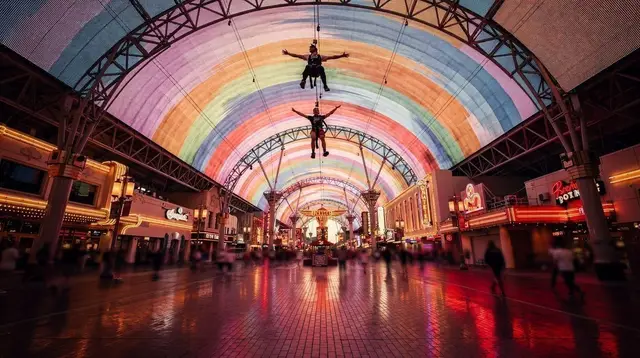
- Classic Strip thrill rides covered in our Strat SkyJump and thrill rides guide, which need no age minimum beyond height requirements and no transfer out of the resort corridor.
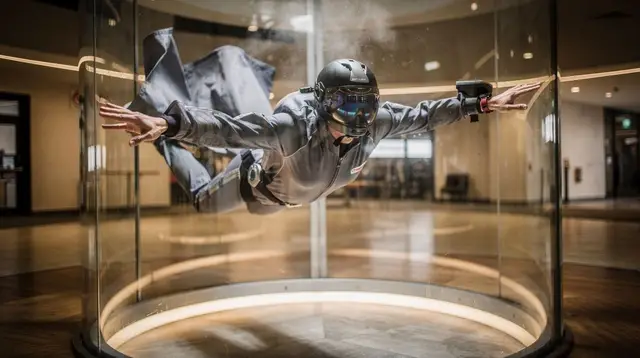
- Indoor skydiving and wind tunnel experiences, another adrenaline activity with a lower age floor than motorsport or firearms.
None of these substitute for the specific experience of a supercar lap or a shooting range session, but they round out an adrenaline-themed day for a group with mixed ages or mixed appetite for risk and cost.
What to bring and what to expect on the day
For a racing experience: closed-toe shoes are typically mandatory (flip-flops or sandals will get you turned away from the track), and loose clothing that could catch on a harness is discouraged. Expect a safety briefing, a signed waiver, and — for self-drive packages — a short instructional session or pace-car laps before you’re cleared to drive solo. Photo and video of your session are common add-ons, rarely included free.
For a shooting range: closed-toe shoes are again standard, and low-cut tops are discouraged since ejected shell casings can occasionally land in unexpected places. Expect a mandatory safety briefing before any live firing, eye and ear protection provided on-site, and an instructor present throughout your session. Bring your ID — this is worth repeating, since it is the single most common reason a booked session gets delayed or refused at check-in.
For both activities, factor in the transfer time on either end of your booked slot — a “one-hour” range package or a “30-minute” racing session can occupy half a day once transfer, check-in, waiver paperwork, and the safety briefing are added to the advertised activity time itself.
Racing experiences and shooting ranges in Las Vegas: frequently asked questions
How much does it cost to drive a race car in Las Vegas?
Ride-along passenger laps generally start around $100-150. Driving yourself is priced by number of laps and car class, and multi-lap supercar sessions frequently exceed $500, sometimes reaching $1,000 or more for top-tier vehicles and longer sessions.
How much does a shooting range package cost in Las Vegas?
Entry-level packages with a handful of firearms and a set number of rounds generally run $80-150 per person. Packages scale up from there based on the number and type of firearms, ammunition included, and add-ons like private instruction.
What is the minimum age to drive a race car or shoot a gun in Las Vegas?
Requirements vary by operator. Driving a car on a closed circuit is often restricted to 21 and over, though some operators allow younger drivers, sometimes from 18, under specific conditions such as a shorter course or supervised format. Shooting ranges commonly require 21 to rent certain firearms without a guardian, though some allow 18 with restrictions. Always confirm the exact age policy with the specific operator before booking.
Do I need ID to go to a shooting range or driving experience in Las Vegas?
Yes. A valid government-issued photo ID is required at check-in for both activities, no exceptions. Firearms rental in particular is tightly regulated, and staff will not proceed without verifying age and identity against the ID presented.
Are racing circuits and shooting ranges located on the Strip?
No. Both types of venues are typically located outside the Strip corridor, often in industrial areas or the desert outskirts of the Las Vegas Valley. Most operators include round-trip transfer from Strip hotels in the package price, with a one-way transfer time of roughly 15-30 minutes.
Is the price I see online the final price?
Not necessarily. Many operators add mandatory insurance or damage-waiver fees for driving experiences, and some shooting ranges charge extra for additional ammunition, upgraded firearms, or photo/video packages. Read the fine print on what is included before assuming the listed price is the total.
Can I just walk in without a reservation?
It is risky. Popular time slots, especially evenings and weekends, sell out in advance, and some venues operate by appointment only. Booking ahead is the reliable way to secure a specific time and vehicle or firearm selection.
Thrills and Adrenaline
Verified deep-linked GetYourGuide tours. Book through these links and we earn a small commission at no cost to you.
GetYourGuide does not provide a product photo for this activity — the image shows the meeting point, photographed by us.