Death Valley Day Trip from Las Vegas
Can you do Death Valley as a day trip from Las Vegas?
Yes, but plan on a full day, not a half day. The drive is roughly two hours each way via Pahrump or Death Valley Junction, and with stops inside the park a round trip typically takes 8 to 10 hours. Park entry is about $30 per vehicle for seven days, paid by card only.
Death Valley looks close on a map of the Southwest, and that is exactly what trips up first-time visitors. It sits about 120 miles from the Strip, which sounds like an easy detour until you account for the fact that it is also the hottest, driest, lowest desert basin in North America. A trip here rewards planning more than almost any other day trip out of Las Vegas, because the margin for error - on water, on fuel, on timing - is genuinely thin for several months of the year.
This guide covers the two realistic routes in, what the park actually costs to enter in 2026, why a full day beats a half day here, the honest trade-off between driving yourself and booking a guided van, and the heat-safety rules that are not optional between June and September.
Getting There: Two Routes, Same Two Hours
There are two common ways to reach Death Valley from Las Vegas by car, and both land at roughly the same drive time - about two hours one-way, not counting stops.
Via Pahrump (Nevada State Route 160, then into California): This route heads southwest out of the Las Vegas valley through Pahrump before crossing into California and entering the park from the east. It is the more commonly used route for visitors coming from the Strip or Summerlin side of the valley, and it puts you within range of Badwater Basin and Furnace Creek fairly directly.
Via Death Valley Junction (US-95 north, then west): This alternative swings up through the desert toward Death Valley Junction before dropping into the park from the southeast. It is a reasonable choice if your route already has you heading north out of the valley, or if you plan to combine the trip with a stop near Valley of Fire style terrain, though the two destinations are not actually on the same road.
Either way, budget close to two hours of driving each direction. Neither route has meaningful traffic congestion - the challenge is the distance and the terrain, not other cars. Fuel up before leaving the Las Vegas valley; gas inside and immediately around the park is limited and priced accordingly, and running low in 49°C heat is not a risk worth taking.
What It Costs to Get In: The 2026 Entrance Fee
Death Valley National Park charges a per-vehicle entrance fee of roughly $30, valid for 7 consecutive days, as of 2026. That covers everyone in your car, so a family or small group pays the fee once, not per person.
One detail catches people off guard: Death Valley is a cashless park. Entrance stations and self-pay kiosks take credit or debit cards only - bring a card, because turning up with only cash will not get you through the gate smoothly. If you already hold an America the Beautiful annual pass, it covers Death Valley’s entrance fee along with most other federal sites in the region; read the America the Beautiful Pass guide if you are planning multiple park stops this trip.
| Fee type | Cost (2026) | Valid for | Payment |
|---|---|---|---|
| Private vehicle | ~$30 | 7 days | Card only, no cash |
| America the Beautiful annual pass | Covers entry | 1 year, all participating federal sites | Purchased in advance |
Why This Is a Full-Day Trip, Not a Half Day
Given the roughly two-hour drive each way, a half-day Death Valley trip from Las Vegas simply does not leave enough time to see anything once you arrive. Realistically, plan on 8 to 10 hours round trip, including stops - which works out to roughly four hours of actual driving and four to six hours inside or around the park.
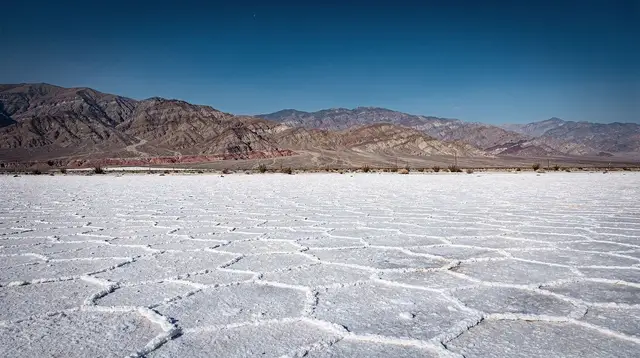
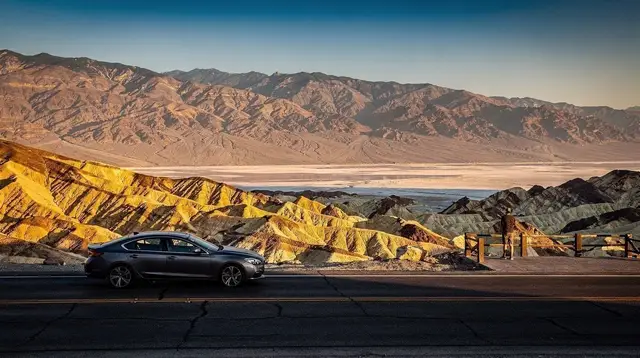
That timeline covers the essentials: a stop at Badwater Basin, the lowest point in North America, a stop at Zabriskie Point for the classic eroded-badlands view, and a pause at Furnace Creek for fuel, restrooms, and water. It does not leave much room for a lengthy hike or a second far-flung viewpoint - trying to cram more in usually means arriving back in Las Vegas well after dark, tired, and having rushed every stop.
If your schedule allows it, treat Death Valley as a trip that deserves the whole day rather than an add-on to something else. For a broader sense of how this compares to other options, see Best Day Trips from Las Vegas by Drive Time and Half-Day Trip from Las Vegas for what actually fits in a shorter window instead.
Self-Drive vs. Guided Van Tour
There is no public transportation to Death Valley - a rental car or an organized tour are the only two ways in. Each suits a different kind of traveler.
Renting a car gives you full control of the schedule: leave when you want, linger at Zabriskie Point as long as you like, adjust the route on the fly. It is generally the cheaper option per person, especially for a group splitting one vehicle. But it puts the responsibility for heat safety, navigation, and vehicle condition entirely on you - there is no guide checking that your air conditioning is working or that you are carrying enough water before you leave. See Renting a Car in Las Vegas and Desert Driving Safety Tips Nevada before you commit to this option.
A guided tour in an air-conditioned van costs more but removes nearly all of that burden. A driver who has done this route repeatedly, a vehicle that is checked and maintained for exactly this kind of trip, and a guide who knows which stops are worth the time and which to skip in extreme heat - that combination is genuinely reassuring for a first visit to the hottest desert in North America, particularly if you are traveling solo or are unfamiliar with remote desert driving.
A guided day tour to Death Valley from Las Vegas typically bundles the drive, entrance logistics, and stop selection into one planned day. Travelers coming from the Los Angeles side sometimes combine the two cities with Death Valley in between on a route between Los Angeles and Las Vegas via Death Valley, or on a private one-day Los Angeles-Death Valley-Las Vegas trip that covers the same ground with a dedicated vehicle.
If Death Valley is one stop on a longer Southwest itinerary rather than a standalone day, a multi-day Los Angeles to Las Vegas tour with accommodation folds the desert crossing into a broader loop instead of a single long day behind the wheel. For a fuller comparison of these two approaches across the region generally, read Guided Tour vs. Rental Car for Day Trips.
| Option | Cost | Flexibility | Best for |
|---|---|---|---|
| Rental car (self-drive) | Lower per person | Full control of timing and stops | Comfortable desert drivers, groups splitting costs |
| Guided van tour | Higher, all-inclusive | Fixed itinerary, guide-managed | First-time visitors, solo travelers, heat-safety peace of mind |
Summer Heat: Not Scenic, Dangerous
This is the part of planning a Death Valley trip that deserves to be taken literally rather than as scenic exaggeration. From June through September, daytime highs in Death Valley regularly exceed 49°C (120°F), and the park has recorded some of the highest temperatures ever measured on the planet. This is not a mild desert warmth - it is a level of heat that can cause serious illness quickly, and it changes what a responsible day trip looks like.
A few rules apply without exception in summer:
- No hiking in the afternoon. Any walking beyond short, paved viewpoint stops like Badwater Basin should happen in the early morning, before the heat peaks. Do not plan an afternoon trail in June, July, August, or September - the temperature at that point is not just uncomfortable, it is hazardous.
- Carry several liters of water per person, not one bottle. Water availability inside the park is limited to a small number of official points, mainly around Furnace Creek - you cannot count on finding more once you are out on the valley floor.
- Check your vehicle before you leave Las Vegas: working air conditioning, a full tank of gas, and good tire condition. A breakdown in Death Valley in July is a serious situation, not an inconvenience.
- Expect no cell signal for long stretches. Large parts of the drive in and around the park have no mobile coverage at all. Download offline maps in advance and do not rely on being able to call anyone if something goes wrong.
None of this means summer travel is impossible - plenty of people visit Death Valley in summer safely every year - but it means the visit has to be planned around the heat, not just noted as a fact about the destination. A guided van tour with an experienced driver and a well-maintained vehicle removes much of this burden, which is part of why it appeals to many first-time visitors specifically in the warmer months. For the fuller picture of what this kind of heat means across the whole region, not just Death Valley, see Las Vegas Summer Heat Guide and Death Valley Driving Safety (Self-Drive).
Winter and shoulder-season months (roughly November through March) are far more forgiving, with daytime temperatures that make midday hiking and longer stops realistic again - worth keeping in mind if your Las Vegas trip dates are flexible.
What to See on a Day Trip
With a full day and roughly four to six hours inside the park, most itineraries center on two or three stops rather than an ambitious checklist:
- Badwater Basin - the lowest point in North America, a vast salt flat reachable via a short, flat walk from the parking area. This is usually the anchor stop of any day trip.
- Zabriskie Point - a short walk from the parking lot to a viewpoint over golden, eroded badlands; one of the most photographed spots in the park and manageable even in warm weather given how brief the walk is.
- Furnace Creek - not a scenic stop in itself, but the practical midpoint of the day: fuel, restrooms, and one of the few places to restock water inside the park.
For a closer look at these two anchor stops specifically, see Badwater Basin and Zabriskie Point. Trying to add a third or fourth far-flung viewpoint on top of these usually means either rushing each stop or extending the day well past the 8-to-10-hour range - reasonable if you are staying for sunset, but worth deciding on deliberately rather than by accident.
Death Valley in the Wider Trip Plan
Death Valley works well as a standalone day trip from Las Vegas, but it also sits naturally within a longer loop for travelers coming from or heading toward Los Angeles, since the park lies roughly between the two cities. If your trip already includes both destinations, folding Death Valley into that drive - rather than treating it as a separate round trip from Las Vegas - can save a considerable amount of backtracking. The 3-day Los Angeles to Las Vegas tour with accommodation is built around exactly that kind of routing.
For travelers weighing Death Valley against other single-day options from the Strip, Best Day Trips from Las Vegas by Drive Time lays out how it compares to closer options like Red Rock Canyon or Hoover Dam, both of which take a fraction of the driving time.
Frequently Asked Questions About a Death Valley Day Trip
How far is Death Valley from Las Vegas?
About 120 miles one-way, roughly a 2-hour drive via Pahrump or via Death Valley Junction, depending on which route and which part of the park you target. Traffic is rarely the issue here; the road itself and the distance are.
How much does it cost to enter Death Valley National Park?
The entrance fee is roughly $30 per private vehicle, valid for 7 days, as of 2026. Death Valley uses cashless payment only, so bring a credit or debit card - cash is not accepted at entrance stations or self-pay kiosks.
Is it safe to drive to Death Valley in summer?
It requires real preparation. From June to September, daytime highs regularly exceed 49°C (120°F), among the hottest recorded anywhere on Earth. A day trip is still possible with a reliable, air-conditioned vehicle, a full tank of fuel, and several liters of water per person, but afternoon hiking should be avoided entirely.
Is there cell phone signal in Death Valley?
No, not reliably. Long stretches of road in and around the park have no mobile signal at all. Download offline maps before you leave Las Vegas and do not assume you can call for help everywhere in the park.
Should I rent a car or book a guided tour to Death Valley?
There is no public transport option, so it is one or the other. A rental car gives you flexibility and is the cheaper option if you already have a license and are comfortable with remote desert driving. A guided van tour costs more but removes the navigation, heat-management, and vehicle-condition worries, which is reassuring for a first visit to the hottest desert in North America.
Where should I stop inside Death Valley on a day trip?
Badwater Basin and Zabriskie Point are the two stops nearly every day-trip itinerary includes, since both are accessible with minimal walking. Furnace Creek is the practical hub for fuel, water, and restrooms partway through the visit.
Can I buy water inside Death Valley National Park?
Only at a small number of official points, mainly around Furnace Creek. Do not count on finding water elsewhere in the park - bring more than you think you need before you arrive.
Death Valley Day Trips
Verified deep-linked GetYourGuide tours. Book through these links and we earn a small commission at no cost to you.
GetYourGuide does not provide a product photo for this activity — the image shows the meeting point, photographed by us.