Getting Around the Strip: Walking, Trams, Monorail and Bus, Honestly Compared
What's the best way to get around the Las Vegas Strip?
No single option covers everything. Walking works for short hops but the Strip is 4.2 miles end to end; free trams only connect a handful of neighboring casinos each; the monorail is fast but only serves the east side; the RTC Deuce bus is the only option that actually runs the full length of the Strip and into Downtown.
I got this wrong on my first trip, and I want to save you the same mistake. I looked at a map of the Strip, saw it running in a more or less straight line, and figured I’d just walk everywhere. By the second afternoon my feet had opinions about that plan, and I still hadn’t worked out that the monorail I kept seeing signs for didn’t actually go anywhere near my hotel. Here’s what I’ve learned since, mode by mode, including the parts nobody tells you before you land.
How long the Strip actually is
The Las Vegas Strip runs about 4.2 miles (6.8 km) from Sahara Avenue in the north to Russell Road in the south. On a phone map that looks like nothing. On foot, in real conditions — pedestrian bridges, casino floors you have to cross diagonally just to get from one door to the other, and Nevada sun overhead for a good chunk of the year — it’s a very different distance.
Walking it end to end without stopping takes roughly 1.5 to 2 hours, and that’s moving briskly, not window-shopping. In summer, when daytime highs commonly sit at 38-43°C (100-110°F), that walk stops being a pleasant stroll and starts being a genuine risk if you’re not carrying water. I’d treat the Strip as three or four separate short walks, not one long one.
For a single-hotel stretch — say wandering from your resort to its immediate neighbors — walking is still the best option. It’s free, it lets you duck into a casino to cool off, and it’s usually faster than waiting for anything else over a distance of a few blocks. I use my Strip walking guide as a rough mental map of where the worst pinch points are before I set out.
Free trams: useful, but not a system
This is the one that trips people up the most. Several resorts run free trams between their own neighboring properties, and it’s tempting to assume they link together into one continuous Strip-wide network. They don’t. Mandalay Bay, Luxor and Excalibur share a tram loop at the south end. Separately, Bellagio, CityCenter and Park MGM run their own connected system further north.
These are two unrelated, disconnected pockets — there’s no free tram that will take you from, say, Excalibur up to the Bellagio. If your itinerary happens to sit entirely within one of these clusters, the tram is genuinely excellent: fast, air-conditioned, and free. Just don’t build a whole day’s plan around trams carrying you the length of the Boulevard, because they won’t.
The Las Vegas Monorail: fast, but half the Strip
The monorail is the mode I see most overpromised online. It’s quick, it’s air-conditioned, and it skips Strip traffic entirely — genuinely nice things. But it only runs along the east side of the Strip, roughly from MGM Grand up to the Sahara area, behind the casinos rather than along the Boulevard itself. If your hotel is on the west side — Bellagio, Caesars Palace, the Venetian, Wynn — the monorail simply doesn’t reach it, and you’ll still need a decent walk or another mode to close the gap. Pricing as of 2026: a single station ticket runs $6, or $5.50 if you buy an eTicket in advance, and a 24-hour unlimited pass is $15. Worth it if your whole trip revolves around east-side hotels; not the one-stop answer some guides make it sound like.
RTC Deuce bus: the one that actually covers everything
If I had to pick a single paid option that covers the full Strip plus Downtown, it’s the Deuce. It’s a double-decker bus that runs the entire length of the Strip and continues on to Downtown/Fremont Street, stopping frequently enough that you’re rarely far from a stop. A single ride is $4, a 2-hour pass is $6, and a 24-hour pass is $8 — reasonable if you’re making more than a couple of trips in a day. It’s slower than a car during peak traffic and it gets crowded on weekend nights, but it’s the only option on this list that doesn’t have a coverage gap.
One thing worth flagging clearly: the SDX (Strip & Downtown Express), which used to run a faster limited-stop route alongside the Deuce, was discontinued after the Covid-19 pandemic and has not come back. If you see it mentioned in an older blog post or a forum thread, ignore it — it’s not a current option, and no ticket or app will get you onto a service that no longer exists.
Biking as a fifth option
It doesn’t come up as often, but a rented bike is worth considering if you’re staying somewhere central and want more range than walking without waiting for a bus. My guide to renting a city bike in Las Vegas covers where the docks and rental shops sit relative to the Strip. It won’t help you in the middle of summer — heat and casino-floor detours make it awkward — but in cooler months it closes the gap between “too far to walk” and “not worth waiting for the Deuce.”
If you’re arriving with a rental car instead, the calculation changes again: parking fees, valet, and traffic on the Boulevard eat into the convenience. My renting a car in Las Vegas guide lays out when a car actually helps versus when it just becomes something to park.
Putting it together
| Mode | Coverage | Cost (2026) | Best for |
|---|---|---|---|
| Walking | Wherever you point yourself | Free | Short hops, 1-3 resorts apart |
| Free casino trams | Only within two separate clusters (e.g. Mandalay Bay-Luxor-Excalibur; Bellagio-CityCenter-Park MGM) | Free | Moving within one of those clusters only |
| Las Vegas Monorail | East side of the Strip only (roughly MGM Grand to Sahara) | $6 single / $5.50 eTicket / $15 for 24h unlimited | East-side hotel stays |
| RTC Deuce bus | Full Strip + Downtown | $4 single / $6 for 2h / $8 for 24h | Full-length trips, Downtown runs |
My honest routine: I walk within a cluster of two or three hotels, hop on a free tram if I happen to be in one of those two loops, and default to the Deuce for anything longer or for a Downtown run. I’ve stopped even looking for the monorail unless I already know my hotel sits on its east-side route. If sitting on a bus isn’t your thing, a hop-on hop-off bus tour covers similar ground with narration thrown in, though it’s built for sightseeing rather than point-to-point trips.
Where you stay changes the answer
None of this exists in a vacuum — which mode makes sense depends heavily on where you’re actually sleeping. My Strip vs. Downtown comparison and the more practical where to stay: Strip vs. Downtown both go into this, but the short version for transportation purposes: a west-side Strip hotel means no monorail access at all, an east-side hotel puts the monorail within reach, and a Downtown/Fremont Street base means the Deuce is effectively your only Strip connection.
If you’re mapping out a full day, my one day in Las Vegas itinerary and the Strip essentials one-day plan both factor these transit gaps into the schedule rather than assuming you can walk everything.
Also worth knowing before you land: getting from the airport to your hotel is a separate question from getting around the Strip once you’re there. My shuttle vs. rideshare vs. taxi from the airport guide and the Harry Reid Airport to Strip transfer guide cover that first leg, and my companion piece on walking the Las Vegas Strip goes deeper on route-by-route walking specifics than I have room for here.
If you’re planning around summer travel dates, read my Las Vegas summer heat guide before you commit to a walking-heavy plan — it changes the calculus on all of the above.
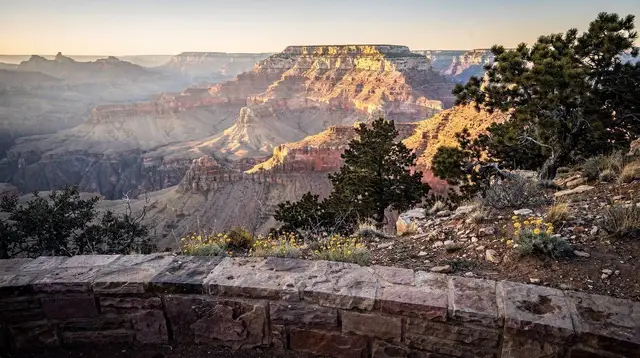
Once you’ve got the Strip figured out, the bigger payoff is usually outside it — Grand Canyon West is close enough for a full-day trip, and a guided bus transfer to Grand Canyon West means you’re not adding a rental car to a trip built around not driving. If you’d rather time it for golden light, a sunset tour to Grand Canyon West skips the midday heat entirely.
For something with more dirt and less pavement, I’ve also enjoyed a guided off-road Bronco adventure to Boathouse Cove, and if you’re curious about the region’s stranger corners, a stop at Nelson Ghost Town with an optional mine tour is an easy half-day departure from the Strip crowds.
For planning the rest of your trip, my complete guide to getting around Las Vegas and the monorail vs. bus vs. rideshare comparison go into more detail on rideshare pricing and airport transfers, which this piece deliberately left out to stay focused on the Strip itself.
Getting around the Strip: frequently asked questions
Does the monorail go to Bellagio or Caesars Palace?
No. The Las Vegas Monorail only runs along the east side of the Strip, roughly from MGM Grand to the Sahara area. Bellagio, Caesars Palace, the Venetian and other west-side properties are not on its route.
Is there a free way to get the whole length of the Strip?
Not really. The free trams only connect a couple of specific resort clusters, not the whole Boulevard. The RTC Deuce bus covers the full Strip and Downtown, but it charges a fare ($4 single ride).
Is the SDX bus still running?
No. The SDX (Strip & Downtown Express) was discontinued after the Covid-19 pandemic and has not resumed. Any guide recommending it is out of date.
How long does it take to walk the whole Strip?
Roughly 1.5 to 2 hours end to end without stopping, covering about 4.2 miles (6.8 km) from Sahara Avenue to Russell Road. Add extra time for pedestrian bridges, cutting through casino floors, and summer heat.
Which free tram connects Bellagio to Excalibur?
None does. The free trams operate as two separate, disconnected clusters: Mandalay Bay-Luxor-Excalibur at the south end, and Bellagio-CityCenter-Park MGM further north. There’s no free tram linking those two groups together.
How much is a Deuce bus pass?
A single ride is $4, a 2-hour pass is $6, and a 24-hour unlimited pass is $8, as of 2026.
Is walking the Strip safe in summer?
It can be dangerous without preparation. Daytime highs commonly reach 38-43°C (100-110°F) in June through August, and dehydration is a real risk over a multi-mile walk. Carry more water than feels necessary and consider breaking the walk into shorter segments with air-conditioned stops.
Getting To and Around Las Vegas
Verified deep-linked GetYourGuide tours. Book through these links and we earn a small commission at no cost to you.
GetYourGuide does not provide a product photo for this activity — the image shows the meeting point, photographed by us.