Lake Mead Watersports: Jet Ski, Boat Rental & Paddling Guide
Can you rent a jet ski or boat at Lake Mead near Las Vegas?
Yes — Lake Mead National Recreation Area, about 40-45 minutes from the Strip, has commercial operators offering jet-ski, wakeboard, pontoon and speedboat rentals, plus guided tours. Availability, launch points and marina locations shift over time as water levels change, so confirm directly with an operator before you drive out.
Getting on the water at America’s largest reservoir
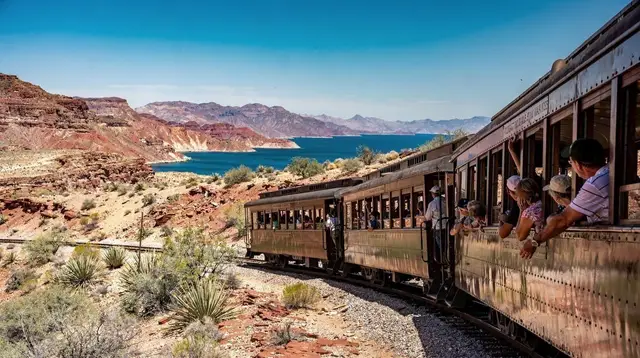
Lake Mead is the reservoir behind Hoover Dam, roughly 40-45 minutes’ drive southeast of the Las Vegas Strip, and it is the most accessible open-water destination for anyone who wants to get on a jet ski, a wakeboard boat, or a paddle board without leaving the region for a day. Unlike the pools and lazy rivers back on the Strip, this is a genuine desert lake carved into red-rock canyon country, with enough surface area to run a boat at speed, tow a wakeboarder, or drift quietly along a shoreline looking for bighorn sheep.
The catch, and the reason this guide leans cautious rather than describing a fixed set of marinas and ramps, is that Lake Mead’s shoreline has moved dramatically over the past two decades. Facilities that were reliable a few years ago are not automatically reliable today. This page covers what is stable — the National Park Service framework, the categories of rental and tour available, realistic costs, and how to plan around the heat — and deliberately avoids promising that any single marina, ramp or exact water level will be there when you arrive.
Lake Mead National Recreation Area: fees and passes
Lake Mead sits inside Lake Mead National Recreation Area, a unit of the National Park Service — a different kind of protected land than Valley of Fire, which is a Nevada state park. That distinction matters for your wallet:
- Lake Mead NRA charges a per-vehicle entrance fee at its gates, standard for a National Park Service unit.
- The America the Beautiful annual interagency pass (the pass that covers National Parks and other federal recreation lands) is accepted at Lake Mead NRA. See the America the Beautiful Pass guide if you’re also planning trips to Zion, Bryce Canyon, or the Grand Canyon — the pass can pay for itself quickly across a multi-park itinerary.
- Valley of Fire, by contrast, is a state park and does not accept the federal pass — a common point of confusion for visitors combining both stops on the same drive out from Las Vegas.
Boat launch fees, marina parking, and any day-use fees for specific facilities are separate from the park entrance fee and are set by whichever concessionaire or marina operates that stretch of shoreline.
Why the shoreline keeps changing
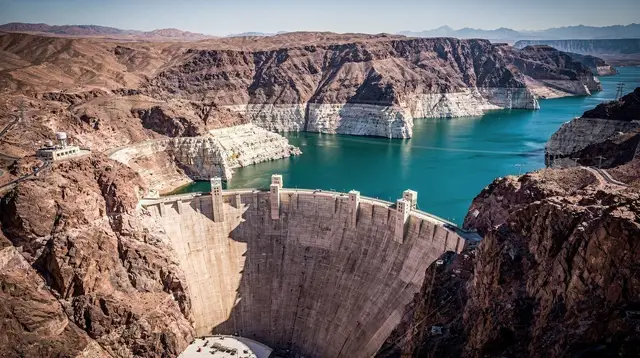
Lake Mead’s story since the early 2000s has been one of prolonged decline driven by a multi-decade drought across the Colorado River basin, combined with heavy water allocation to agriculture and cities across several southwestern states. The lake has seen partial recoveries in wetter years and further drops in dry ones, and the net effect over two decades has been a substantially lower waterline than the lake’s historic full-pool level.
That falling shoreline has had a direct, physical effect on infrastructure: some historic marinas and boat ramps that sat comfortably at the water’s edge in past decades have had to relocate toward deeper water, shorten or extend their ramps, or in some cases close outright because the water retreated too far from the original site. This is not a one-time event that happened and finished — it is an ongoing condition of the lake, and it can change again with a wet or dry winter.
What this means practically: do not plan your trip around a specific marina name, boat ramp, or “the water is at X feet” figure you read somewhere, including on this page. Call or check the website of the specific operator or marina you intend to use in the days before you go, and confirm they are currently launching boats, renting equipment, and operating at the location you expect. A rental company’s own booking page is usually the most current source, since they have direct commercial reason to keep hours and locations accurate.
What’s available on the water
Despite the shifting shoreline, Lake Mead has remained a working recreation lake with a mix of options for getting out on the water:
Jet skis. Personal watercraft rental is the most popular self-drive option, usually rented by the hour or in half-day blocks, with operators providing life jackets and a safety briefing before you head out.
Powerboats and pontoons. Larger rental boats — often pontoons for a relaxed group outing, or ski/wakeboard boats with a tow rope — suit groups who want to swim, sunbathe on the water, and take turns behind the boat rather than each running a solo jet ski.
Wakeboarding and water skiing. Where a suitable boat and calm stretch of water are available, towed wakeboarding and water skiing are offered either as an add-on to a boat rental or as a dedicated lesson package with an instructor.
Kayaks and paddleboards. For a quieter, muscle-powered alternative, kayak and stand-up paddleboard rentals let you explore coves and inlets at your own pace — and the nearby Black Canyon stretch of the Colorado River below Hoover Dam is a well-known guided kayak route distinct from the open lake itself, often run as its own half-day trip.
Cruise and tour boats. If you’d rather be on the water without driving anything yourself, narrated cruise boats and dinner cruises run on set schedules — a good option for anyone traveling with people who don’t want to operate a rental craft, including younger kids or non-swimmers. A two-hour dinner cruise on Lake Mead is a low-effort way to see the reservoir and its canyon scenery from the water while someone else handles the driving.
Self-drive rental vs. guided outing
| Factor | Self-drive rental (jet ski, boat) | Guided or instructor-led tour |
|---|---|---|
| Boating experience needed | Some comfort on the water helps; briefing usually included | None — the guide or captain handles navigation |
| Flexibility | You choose pace, route, stops within the rental area | Fixed route and schedule set by the operator |
| Group size | Good for couples/small groups sharing a craft | Works well for solo travelers and larger groups |
| Cost per person | Can be cheaper split across a full boat | Often includes narration, gear, sometimes food/drink |
| Responsibility for conditions | On you — reading water level, marked hazards, weather | On the operator, who runs the route daily |
Neither option is objectively “better” — a self-drive jet ski or pontoon rental suits visitors who want independence and don’t mind a short safety orientation, while a guided tour suits anyone who would rather not be responsible for reading an unfamiliar lake’s current conditions, especially given how much the shoreline and marked hazards can shift as water levels move. If you’re combining the lake with wildlife-watching, the Lake Mead wildlife tour that also stops at Seven Magic Mountains packages a narrated lake outing with one of the region’s most photographed roadside art installations on the way back toward the Strip.
Realistic costs
Treat every figure here as an order of magnitude, not a locked-in quote — rates change by operator, season, and fuel costs:
- Jet ski rental: roughly $100-150 per hour is a reasonable planning range at Lake Mead-area operators, sometimes lower per hour on multi-hour or half-day packages.
- Pontoon or powerboat rental: typically priced higher per hour than a jet ski but split across a group, often bringing the per-person cost down for parties of four or more.
- Guided kayak or paddle tours: usually sold as a fixed multi-hour package rather than hourly, often in the $80-150 per person range depending on length and whether gear and transport from Las Vegas are included.
- Cruise and dinner-cruise boats: priced per person on a set schedule, generally in a similar range to other half-day guided activities in the region.
Always confirm the current price and any fuel, cleaning, or damage-deposit surcharges directly with the rental company before you drive out — these line items are common with personal watercraft rentals and are not always obvious in an advertised hourly rate.
Heat, sun, and water safety
Lake Mead sits in the Mojave Desert, and the water itself does not protect you from the sun the way you might expect. A few points worth taking seriously:
- Air temperatures regularly hit 38-43°C (100-110°F) across the main summer months, and there is essentially no shade once you’re out on open water.
- Glare off the water intensifies sun exposure compared to being on land, which means sunburn happens faster than it feels like it should. Reapply sunscreen more often than you would on shore, and consider a long-sleeve rash guard.
- Hydration matters as much on the water as on a desert hike. Bring more water than you think you’ll need — rental operators generally do not supply drinking water as standard.
- Afternoon storms, while less common than in some other desert regions, can develop quickly in summer and bring sudden wind gusts across open water — check the forecast and any operator advisories before heading out, and come back in early if conditions shift.
- If you’re planning a broader summer trip around Las Vegas, the Las Vegas summer heat guide covers precautions that apply well beyond the water.
Pairing Lake Mead with the rest of the area
Because Lake Mead sits right alongside Hoover Dam and Boulder City, most visitors don’t treat watersports as a standalone trip — they build it into a half-day or full-day loop. A few natural pairings:
- Hoover Dam tour + lake time: many visitors combine a morning Hoover Dam tour or the half-day trip from the Strip with an afternoon on the water, since both fall within the same drive.
- Walking the dam bridge: the Mike O’Callaghan-Pat Tillman Memorial Bridge walk offers a dramatic overlook of both the dam and the upper end of the lake, and takes less than an hour.
- Boulder City detour: the small, historic town of Boulder City sits between Las Vegas and the dam and makes a good lunch or coffee stop; the Boulder City railway day trip is a separate half-day activity if you have extra time.
- Below-the-dam kayaking: for a completely different feel from the open reservoir, the Black Canyon kayak route below Hoover Dam runs through a narrow canyon with warm springs and calmer, current-driven paddling rather than open-water boating — the guided Emerald Cave kayak tour is one of the better-known versions of this route.
- Combining biking and paddling: for a more active day, the guided biking and kayak combo tour pairs a scenic ride with time on the water in a single outing.
- Stargazing after dark: once the boats come off the water, Lake Mead’s dark desert skies make it a reasonable base for an evening desert stargazing tour.
- Driving yourself: if you’re renting a car for the day rather than joining a tour, check renting a car in Las Vegas and general desert driving safety tips before setting out, since some access roads to boat launches can be exposed, narrow, or poorly marked.
For a broader sense of when to visit, the best time to visit Las Vegas tool and the Hoover Dam and Valley of Fire day trip itinerary both help frame Lake Mead watersports against the rest of a Las Vegas-area trip, and the Hoover Dam & Lake Mead things-to-do page rounds up other activities in the same area if you want to build a fuller day.
The bottom line
Lake Mead remains one of the easiest ways to combine desert scenery with genuine open-water recreation within an hour of the Las Vegas Strip, whether that means renting a jet ski for an hour, taking a group out on a pontoon, or joining a narrated cruise or guided kayak trip instead. What has changed, and keeps changing, is the shoreline itself: a multi-decade drought has pulled the water level down from its historic high, closing or relocating some historic marinas and ramps along the way. Treat any specific facility, launch point, or water-level figure — including anything printed here — as something to verify with the operator directly before you commit to a plan, rather than as a fixed fact about the lake.
Lake Mead Cruises and Boat Tours
Verified deep-linked GetYourGuide tours. Book through these links and we earn a small commission at no cost to you.
GetYourGuide does not provide a product photo for this activity — the image shows the meeting point, photographed by us.