Beginner Table Games Lessons in Las Vegas: Blackjack, Craps, Roulette, Baccarat
Where can beginners learn table games in Las Vegas before betting real money?
Several Strip and off-Strip casinos run free or low-cost table-games lessons on weekday mornings, using play money to teach blackjack, craps, roulette and baccarat rules and etiquette. Schedules change often, so always confirm the day's lesson times at the casino's players' club desk or website before you go.
Walking onto a Las Vegas casino floor for the first time can feel like arriving at a party where everyone already knows the rules. Dealers move fast, chips get pushed and pulled in seconds, and the person next to you is calling out bets in a shorthand you don’t recognize. That gap between wanting to play and actually knowing how is exactly what this guide is for — not a system for winning, because there isn’t one, but a practical map of how beginners actually learn blackjack, craps, roulette and baccarat in Las Vegas before they ever put down real money.
What a casino table games lesson actually covers
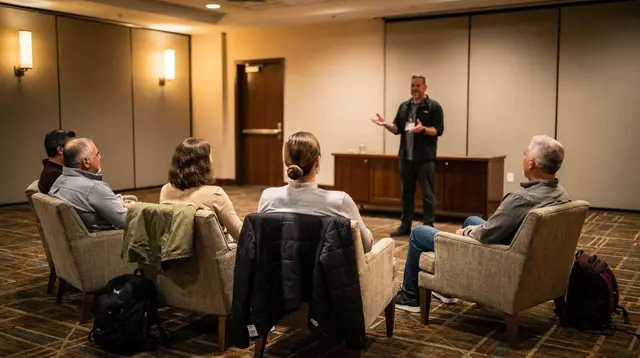
A number of resorts on and around the Strip run informal lessons for newcomers, most often on weekday mornings before the floor fills up with regular play. These sessions are not a formal class with a certificate at the end — they’re closer to a dealer or pit staff member walking a small group through one game at a time, using play chips (or sometimes no chips at all) so nobody risks a cent while learning.
A typical lesson walks through:
- The basic object of the game — what counts as a win, what the payouts look like, and what a “push” or tie means.
- Betting spots on the table layout — where to place a bet, and what each area of the felt represents.
- Hand signals and etiquette — tapping the felt for another blackjack card, waving a hand to stand, how and when to tip a dealer, and how not to touch chips once bets are down.
- Pacing — how quickly a round moves, so the speed of a live table doesn’t come as a shock afterward.
Because these lessons are offered informally and change with each property’s staffing, the smartest move is always to confirm directly with the casino — call the players’ club desk, check the casino’s own site, or ask at the casino host podium — rather than assuming a lesson runs on a fixed public schedule. What’s true one month can shift the next.
Blackjack: the game most lessons start with
Blackjack tends to be the first game covered because it has clear, learnable rules: get closer to 21 than the dealer without going over, with face cards worth 10 and an ace worth 1 or 11. A lesson will typically cover:
- When to hit (take another card) or stand.
- What “doubling down” and “splitting a pair” mean, and when they’re allowed.
- Basic table etiquette — hand signals instead of verbal calls for hits and stands, and never touching your cards on a table where cards are dealt face up.
Blackjack has more decision points than the other three games, which is exactly why beginners benefit from a hands-on walkthrough rather than reading the rules on a card. That said, no lesson teaches a way to overcome the house’s built-in edge — see below.
Craps: the loudest table on the floor, explained slowly
Craps looks intimidating from across the room — a crowd of players shouting at a table covered in dozens of different betting boxes — but the core bet (the “pass line”) is simple: you’re betting on the outcome of a shooter’s dice roll. Lessons on craps focus heavily on:
- The pass line bet and how a “come out roll” works.
- Reading the table layout, since craps has more bet types than any other table game.
- Where to stand and how betting rounds move around the table.
Craps rewards a slow introduction more than any other table game here, because jumping straight into a live game with a full crowd is genuinely disorienting for a first-timer.
Roulette and baccarat: simpler to follow, still house-edged
Roulette and baccarat are usually the easiest for a beginner to pick up because, once your bet is placed, the dealer resolves the entire round — there’s no in-round decision to make.
- Roulette: bet on a number, a color, or a range of numbers, then watch the wheel. A lesson mostly covers the betting layout (inside bets on specific numbers, outside bets on colors or ranges) and payout differences between them.
- Baccarat: bet on “Player,” “Banker,” or a tie before two hands are dealt and compared against a fixed set of drawing rules. There’s no skill decision during the hand at all — the entire game is a single bet followed by a result.
Both games are approachable precisely because there’s less to remember mid-hand, which is why some first-timers find them a gentler starting point than blackjack or craps.
Minimum bets: why the same table can cost $5 or $50
One of the most common surprises for beginners is discovering that a casino’s advertised “low minimum” table isn’t the same table all day. In 2026, the most accessible weekday daytime tables at many properties post minimums in roughly the $5 to $25 per hand range — but that same table, or a nearby one, often jumps sharply once evening or weekend crowds arrive, sometimes to $25, $50 or more per hand. There is no fixed citywide minimum, and no guarantee that a low-limit table you found on one visit will still have the same limit on your next one, or even later the same day.
| When | Typical minimum range (per hand, order of magnitude) |
|---|---|
| Weekday daytime, quieter tables | ~$5–$25 |
| Weekday evening | ~$15–$50 |
| Weekend, any time | ~$25–$100+ |
| High-limit or VIP tables | $100–$500+ |
Treat every figure here as a rough guide, not a guarantee — table minimums are set property by property, floor by floor, and change with demand. If a low minimum matters to your plan, a quick walk of the floor (or a call ahead) beats assuming.
The house edge: what a lesson will and won’t tell you
Every lesson worth attending is upfront about one thing: blackjack, craps, roulette and baccarat are all built with a statistical edge in the casino’s favor. That edge varies by game and by specific bet — some bets carry a smaller house edge than others — but it never disappears, and no betting pattern, streak-tracking method or “system” changes the underlying math over the long run. A lesson teaches you the rules, the etiquette and the mechanics of play; it will not, and should not, claim to teach you a way to beat the house consistently. Anyone who tells you otherwise is not describing how these games actually work.
That’s also why the most useful mindset for a beginner isn’t “how do I win” but “how do I enjoy this responsibly” — deciding on an amount you’re comfortable spending as entertainment before you sit down, and treating that as the cost of the experience rather than money you expect to get back.
Access rules: 21 and over, no exceptions
Nevada law requires anyone at a casino table game to be 21 or older, and casinos check photo ID at the table, not just at the door. There is no allowance for a minor to sit at a table even accompanied by a parent or guardian — a person under 21 can walk through most casino floors but cannot sit down and play. If you’re planning a first-timer visit, ID checks are routine and can happen more than once in a night, so keep a valid photo ID on you whenever you’re near the tables.
Where to find lessons and practice tables
Lessons are most common at larger resorts with high daytime foot traffic, both directly on the Strip and at nearby off-Strip casinos, as well as in Downtown/Fremont Street, where lower stakes and a more relaxed pace are already part of the area’s identity. A practical first-timer route often looks like:
- Call ahead or check online for a weekday-morning lesson at a resort you’re already staying at or near.
- Attend the lesson using play chips, and ask questions freely — dealers running these sessions expect beginners.
- Move to a quiet daytime table afterward, ideally still on a weekday, where the pace is calmer and minimums tend to be lower than evening or weekend play.
- Set a spending limit for the session before you sit down, and treat it as fixed.
If you’d rather ease into the broader casino floor first — slot machines, video poker and casual bar seating — before committing to a table, it’s worth reading up on casino bars and slot machines, which involve far less etiquette pressure for an absolute first-timer.
Strip or Downtown: which suits a first-time table player
Both major gambling corridors run beginner-friendly tables, but they feel different in practice. The Strip has more resorts overall, which means more chances to find a lesson running on any given morning, but its tables can also fill up faster once the floor gets busy. Downtown/Fremont Street has historically leaned toward lower minimums and a slower, less flashy pace, which some first-timers find easier to settle into before graduating to a bigger Strip property. Neither side is objectively better for a beginner — it mostly comes down to where you’re staying and how much bustle you want around you while you’re still learning hand signals.
If you’re spending part of your trip Downtown anyway, it’s worth pairing a table games lesson with a walk through the neighborhood’s other draws — the Downtown Fremont walking tour guide covers the area’s casinos and Fremont Street Experience, and the Mob Museum sits a short walk from several lower-limit tables if you want a break between the lesson and your first real-money hand. For a broader read on how the two areas differ beyond gambling, Las Vegas Strip vs. Downtown covers pricing, crowds and atmosphere side by side.
Tipping the dealer: an unwritten rule beginners miss
Nobody explains tipping etiquette on the casino floor the way a server explains it in a restaurant, and it trips up more first-timers than any betting rule. Dealers work for tips, and the norm at most tables is to place a small bet “for the dealer” occasionally, or to tip directly with chips after a winning hand — never cash placed in a dealer’s hand, which some properties don’t allow.
A free lesson is a low-pressure place to ask exactly how tipping works at that casino, since practices vary slightly by property and by game. If you want the fuller picture of tipping norms across a Las Vegas trip — valet, housekeeping, bartenders and more — tipping in the USA: a Las Vegas guide walks through the expectations beyond the table.
What to bring — and what not to bring — to your first session
You don’t need much for a lesson or a first real-money session, but a few basics make the morning smoother. Bring a valid, unexpired photo ID even to a free lesson, since some casinos check ID at the door of any table-adjacent area, not only once you sit down to bet. Cash in small denominations is more useful than a large bill you’ll need broken immediately, and it’s worth deciding your spending limit before you leave your room rather than at the table, when the pace of play makes decisions faster than you’d like.
Leave large bags or anything that needs to sit on the felt at home or in your room — dealers need a clear table, and pit staff will ask you to move bulky items away from the layout. None of this is complicated, but knowing it in advance means one less thing to figure out in the moment.
Pairing a lesson with the rest of your trip
A morning table games lesson leaves the rest of the day free, and pairs naturally with the kind of daytime and evening activity most first-time visitors are already planning around the resort corridor. If you’re staying near the pools, a skip-the-line pool party experience is an easy way to fill the afternoon between a morning lesson and an evening on the floor.
For visitors building a full night out, a VIP nightclub outing with skip-the-line access or a two-hour open bar with games and Omnia entry both make sense as an evening bookend once you’ve had your fill of the tables. If you’d rather sample several venues in one go with a group, a guided Vegas bar crawl is a lower-pressure way to see multiple bars without navigating them solo.
If you’d rather spend the stretch between a morning lesson and an evening at the tables outdoors and on foot, a small-group Strip walking tour is a good way to get oriented to the resort corridor without the sensory overload of the casino floor. For a lighter dose of Vegas absurdity between the lesson and your first real-money hand, some visitors work in an unrelated afternoon show — the strip walking tour guide and the how to choose a show guide both cover ways to fill that window without touching a table.
A realistic first visit, start to finish
For someone who has never sat at a table before, a workable first day looks less like diving in cold and more like layering a little structure onto the visit:
- Morning: attend a free or low-cost lesson at your resort or a nearby casino, focusing on one or two games rather than all four.
- Midday: take a break, eat, and let the rules settle before you play with real money — the pace of a live table is faster than a lesson, and a little distance helps.
- Afternoon or early evening: sit at a quiet, lower-limit table on the game you felt most comfortable with, with a spending limit decided in advance.
- Later in the day: shift to the rest of the resort corridor — a show, a bar, a pool scene — rather than chasing more table time to “make back” anything lost, which is the single most common way a fun first session turns into a frustrating one.
None of this guarantees a win, because nothing does. What it does is turn an intimidating, fast-moving casino floor into something you understand well enough to enjoy on your own terms — which, for a first Las Vegas trip, is the actual goal.
If you’re still deciding how the rest of your visit fits together, how many days in Las Vegas and first-time Las Vegas, step by step are useful next reads, and Las Vegas Strip vs. Downtown helps decide which part of the resort corridor suits a beginner’s pace best. For a full framework that slots a morning lesson into a longer stay, the first-time Las Vegas, three days itinerary lays out a day-by-day pace built around exactly this kind of easing-in approach.
Nightlife and Comedy Clubs
Verified deep-linked GetYourGuide tours. Book through these links and we earn a small commission at no cost to you.
GetYourGuide does not provide a product photo for this activity — the image shows the meeting point, photographed by us.