Antelope Canyon: How to Book a Navajo-Guided Tour and Permit
How far in advance should I book Antelope Canyon?
Book 2-3 months ahead for high season (March-October), and earlier still for a midday light-beam slot between mid-March and early September. In low season (November-February) a few days' notice can work, but canyons can close without notice for flash flood risk, and refunds are not guaranteed.
Why Antelope Canyon booking works differently from a national park
Antelope Canyon is not managed by the National Park Service, and it is not open land you can wander onto with a park pass. Both Upper Antelope Canyon and Lower Antelope Canyon sit entirely within the Navajo Nation, on tribal land near Page, Arizona. Every visitor - no exceptions, no independent hiking, no early-morning solo access - must enter with a licensed Navajo guide, on a ticket that bundles a paid tribal permit into the price. This single fact drives everything else about how, and when, you need to book.
That structure means Antelope Canyon behaves more like a ticketed attraction with limited daily capacity than like a hiking trail. Slots are finite, guides run fixed group sizes through the slot canyon on a schedule, and popular time windows - especially the midday “light beam” slots in Upper Antelope Canyon - sell out on a real calendar, not a rolling walk-up basis. If you are planning a Grand Circle trip that includes Antelope Canyon alongside Horseshoe Bend or Monument Valley, this is usually the one booking on the whole itinerary that needs locking down first.
Upper vs. Lower Antelope Canyon: two separate operations
Upper and Lower Antelope Canyon are physically close to each other but run as completely separate businesses, each with its own Navajo-owned operator, its own permit system, and its own ticket. A ticket for one is not valid for the other, and the two experiences differ enough that the choice matters.
| Upper Antelope Canyon | Lower Antelope Canyon | |
|---|---|---|
| Terrain | Flat, walk-in slot at ground level | Narrower slot; metal stairs and ladders |
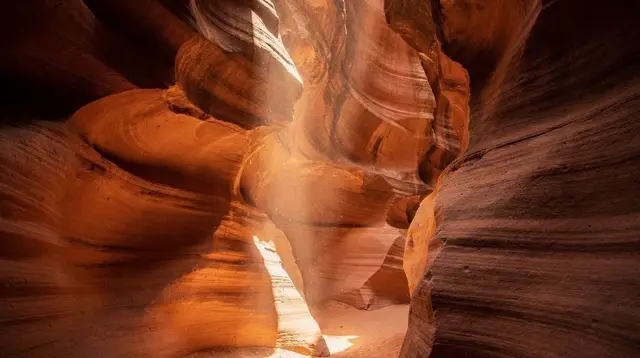
| Famous for | Midday light beams (mid-March to early September) | Tighter rock formations, fewer crowds |
| Typical group pace | Slower, more photo stops | Faster-moving, more physical |
| Relative price | Generally higher, especially light-beam slots | Generally somewhat lower |
| Mobility considerations | Easier for most visitors, still soft sand | Not suited to limited mobility, strollers, or fear of ladders |
For most first-time visitors chasing the classic postcard light beams, Upper Antelope Canyon is the draw, and a light-beam-specific tour like the Upper Antelope Canyon prime-time Navajo-guided entry is built around that midday window. If ladders and a livelier pace don’t bother you and you’d rather save some money or dodge the biggest crowds, a Lower Antelope Canyon entry with a Navajo guide is the more budget-friendly route, and neither is a downgrade - they are genuinely different canyons with different characters.
Booking timeline: how far ahead you actually need to plan
The honest answer depends heavily on season and on whether you want a specific light-beam time slot.
High season (March-October). This is when the vast majority of visitors come, tour buses run from Las Vegas and Flagstaff, and slots fill up correspondingly fast. Book 2-3 months ahead if your dates are fixed and you want a reasonable choice of time slots. Waiting until a few weeks out in July or August routinely means settling for whatever leftover slot remains, if any.
Light-beam slots (mid-March to early September, midday). This narrower window inside high season is the most contested booking at Antelope Canyon. The beams appear only when the sun is high enough to shine directly down into the slot, which in practice means a short midday period on clear days. These specific slots are chased by photographers and tour groups alike, and they can sell out before general entry does for the same date. If a light-beam photo is the whole point of your visit, book as early as the operator’s calendar opens, and treat 2-3 months out as a floor, not a comfortable cushion.
Low season (November-February). Crowds thin out substantially, and a booking made just a few days ahead is often fine. The trade-off is that this is also flash-flood season in the wider region, and low winter sun angles mean no light beams at all - low season is about a quieter, more contemplative visit to the slot canyon itself, not the postcard shot.
The flash-flood risk: closures without a guaranteed refund
Antelope Canyon is a slot canyon carved by water, and the same feature that makes it beautiful makes it genuinely dangerous during runoff. Flash floods can originate from a storm many miles upstream in the watershed, arriving at the canyon with little or no local warning even under a clear blue sky at the entrance. Because of this, Navajo operators will close the canyon - sometimes with only hours of notice, occasionally the same morning as a scheduled tour - whenever conditions in the watershed pose a risk.
This is not a rare, hypothetical scenario; it happens multiple times most years, concentrated in the summer monsoon season (roughly July-September) but possible whenever there has been significant rain upstream. What you should plan for:
- Refund policies vary by operator and are not standardized. Some rebook you for another slot during your stay, some issue a partial credit, and a full cash refund is not guaranteed by any operator as a matter of course.
- Read the specific cancellation and weather policy before paying, not after a closure notice arrives. This is the single most important line item to check when comparing operators, more so than the ticket price itself.
- Build a buffer into your itinerary if Antelope Canyon is a priority - a same-day drive-in, tour, drive-out plan with no slack leaves no room to rebook if your slot is cancelled.
No operator, direct or third-party, can promise a refund for a flash-flood closure - and any listing that claims otherwise should be treated with suspicion.
The Navajo Nation daylight saving time trap
This catches more visitors than almost any other logistical detail on a Southwest itinerary. Nevada observes daylight saving time, moving clocks forward in March and back in November like most of the United States. Arizona as a state does not observe daylight saving time - it stays on standard time year-round. But the Navajo Nation, which includes Page and the land Antelope Canyon sits on, does observe daylight saving time, specifically so its clock stays aligned with neighboring Utah and New Mexico rather than with the rest of Arizona.
The practical effect: for roughly half the year (spring through fall), Page and Antelope Canyon run on a different clock than the rest of Arizona, even though Page has an Arizona mailing address. Depending on the season and where you’re coming from, this can mean your phone or a booking confirmation shows a time that isn’t actually the time your guide is expecting you. Visitors have shown up to their check-in an hour early or, worse, an hour late and missed a paid, non-refundable slot entirely because of this mismatch.
Always confirm the local time directly with your Antelope Canyon operator, not just from your phone’s automatic time zone, in the days before your tour - this is worth a two-minute phone call or email to avoid losing a booking you planned months in advance.
Direct booking vs. third-party platforms
You can book an Antelope Canyon tour two ways: directly through the Navajo-owned tour operator’s own booking system, or through a third-party travel platform that resells the same tours.
Booking directly with the operator is generally the lower-priced option, since there’s no reseller commission built into the price, and the money goes straight to the Navajo-owned business running the tour. The trade-off is that direct-booking websites can be less polished, cancellation terms are whatever that specific operator offers, and customer support may be limited to local business hours in Page.
Booking through a third-party platform typically costs a bit more, since the price includes the platform’s commission, but often comes with a more familiar booking flow, English-language customer support, sometimes more flexible cancellation windows, and the ability to bundle Antelope Canyon with a nearby stop like a combined Antelope Canyon and Horseshoe Bend tour in a single booking. For travelers who value easier rebooking if a flash-flood closure or a flight delay disrupts plans, that flexibility can be worth the price difference.
Neither route is objectively “correct” - it depends on how much you value saving a modest amount of money versus the convenience and flexibility a platform can offer. What doesn’t change either way: the guide is still Navajo, the permit is still tribal, and the underlying tour product is the same regardless of who takes your payment.
What a typical Antelope Canyon tour includes
Most tours, whichever operator or canyon you choose, follow a broadly similar structure:
- Check-in at the operator’s office or a designated meeting point in Page, generally 15-30 minutes before your scheduled slot.
- Transport into the canyon on the operator’s own vehicle - open-air trucks are common for Upper Antelope Canyon, since the approach crosses soft sand that regular vehicles can’t manage.
- A guided walk through the slot, typically 60-90 minutes, with the Navajo guide pointing out rock formations, explaining the canyon’s geology and cultural significance, and - especially in light-beam season - helping position visitors for photos.
- Return transport back to the check-in point.
Photography equipment rules vary: some operators restrict tripods or bulky camera bags on general tours to keep the narrow passages moving, while dedicated photography tours (often pricier, with smaller groups and more time) allow full gear. Check the specific tour’s equipment policy if photography is your main reason for visiting.
Getting to Page from Las Vegas
Page, Arizona sits roughly 270-280 miles from Las Vegas, which works out to roughly 4.5-5 hours of driving one-way - this is not a casual half-day trip, and most visitors either treat it as a full-day round trip with an early start, or as part of a multi-day loop through the Grand Circle that also takes in Lake Powell and Monument Valley.
If you’d rather not drive it yourself, a multi-stop guided day tour from Las Vegas covering Antelope Canyon and Horseshoe Bend handles the driving, the permit, and the guide booking as one package - useful given how far ahead the canyon portion needs to be locked in anyway.
For travelers building a longer loop rather than a single day trip, see the Grand Circle three-day itinerary or the fuller Grand Circle seven-day route, both of which sequence Antelope Canyon alongside the region’s other major stops so the long drive only has to happen once.
A realistic booking checklist
- Decide Upper or Lower first - the light-beam photo (Upper) versus a faster-paced, less expensive slot canyon walk (Lower) are genuinely different experiences.
- If chasing light beams, book as early as your dates allow, ideally 2-3 months out, and specifically confirm the tour includes the midday light-beam window rather than a generic time slot.
- Read the cancellation and flash-flood policy on whichever operator or platform you book through, before paying - this detail matters more than a small price difference.
- Confirm local time with the operator close to your visit date, given the Navajo Nation’s daylight saving time versus the rest of Arizona.
- Decide between direct booking (usually cheaper) and a third-party platform (often more flexible, sometimes bundled with nearby stops) based on how much you value price versus flexibility.
- Never assume a last-minute high-season booking will be available - it sometimes is, but it is a gamble, not something to build a fixed itinerary around.
- Build a buffer day or flexible return plan if Antelope Canyon is a priority stop, in case of a weather-related closure.
Antelope Canyon rewards planning far more than most stops in the region - not because it’s difficult to reach, but because its Navajo-permit structure, its narrow light-beam window, and its flash-flood-driven closures all work against improvisation. Lock in the booking early, understand the cancellation terms, and the rest of the visit tends to go smoothly.
Antelope Canyon and Page Day Trips
Verified deep-linked GetYourGuide tours. Book through these links and we earn a small commission at no cost to you.
GetYourGuide does not provide a product photo for this activity — the image shows the meeting point, photographed by us.