Grand Canyon South Rim: Best Sunrise and Sunset Spots
Where's the best spot for sunrise and sunset at the Grand Canyon South Rim?
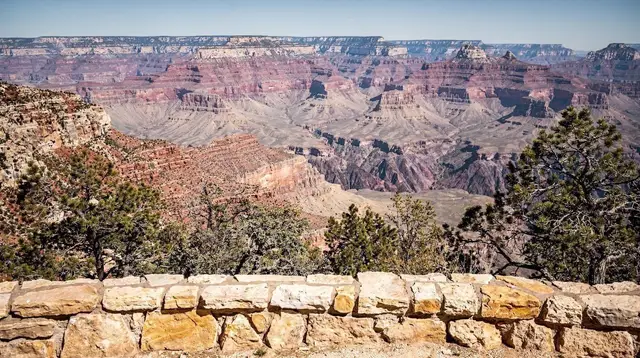
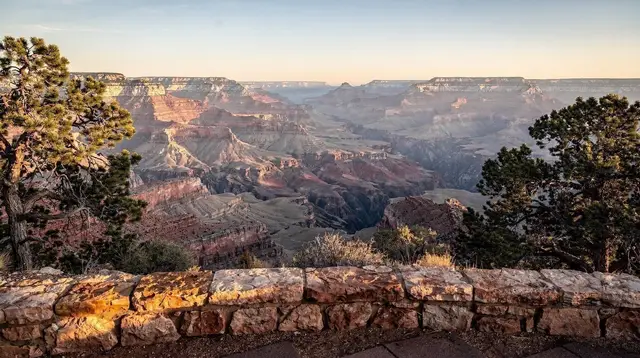
Mather Point and Yaki Point face east and catch direct light on the canyon walls at sunrise. Hopi Point and Mohave Point, both on Hermit Road, face west and are the classic sunset spots. Seeing both properly means staying overnight near the park — a same-day round trip from Las Vegas cannot cover sunrise and sunset in one visit.
Why sunrise and sunset need two different viewpoints
The Grand Canyon South Rim runs roughly east to west, which means the light does something specific at each end of the day: at dawn, low sun from the east rakes directly across the canyon walls facing the rising sun, and at dusk, the same thing happens in reverse from viewpoints that face west. That’s the whole logic behind why guides point you to different spots for sunrise than for sunset — it isn’t tradition, it’s geometry. Get the direction wrong and you’ll spend your morning at a viewpoint staring into a canyon that’s still mostly in shadow, or your evening at a spot where the sun disappears behind a ridge with 20 minutes of color left unseen.
This guide covers the two sunrise viewpoints worth the early alarm — Mather Point and Yaki Point — and the two sunset viewpoints on Hermit Road that consistently deliver, Hopi Point and Mohave Point. It also covers the timing you actually need (not a vague “check locally”), the crowd reality at each spot, and the logistics that most day-trip guides skip over: you cannot do sunrise and sunset at the South Rim in the same visit if you’re coming from Las Vegas, and the choice between staying in Tusayan or Williams the night before changes both your budget and your morning.
Sunrise: Mather Point vs. Yaki Point
Mather Point is the South Rim’s most visited viewpoint for a reason — it sits essentially next to the Grand Canyon Visitor Center, has a large paved overlook, and requires no shuttle or advance planning to reach if you’re staying nearby. Facing roughly east-southeast, it catches the first direct sunlight on the canyon walls, and the paved trail connecting it to the visitor center means you can walk up in the dark with a headlamp and find a spot without much guesswork. The tradeoff is crowding: because it’s the easiest viewpoint to reach, it’s also the most popular, and on a clear morning in peak season you’ll be shoulder to shoulder with a few hundred other people along the railing.
Yaki Point, a few miles east along the rim, is the quieter alternative with arguably a better angle on the sunrise light hitting the canyon’s inner buttes and temples. The catch is access: Yaki Point Road is closed to private vehicles year-round, so the only way there is the free park shuttle (the Kaibab Rim Route), which doesn’t start running until close to first light in some seasons — meaning a very early sunrise in June can actually be harder to catch here than at Mather Point. Check the shuttle’s first-departure time against your date’s actual sunrise time before committing to Yaki Point; if the shuttle starts running after sunrise in your season, Mather Point is the more reliable pick.
Either way, walk or ride out in the dark. Bring a headlamp, wear more layers than feels necessary (rim elevation is around 7,000 feet / 2,100 m, and pre-dawn temperatures can be surprisingly cold even in summer), and expect the real show — the shift from grey to orange to full daylight — to take a good 30-45 minutes rather than being one single moment.
Sunset: Hopi Point and Mohave Point on Hermit Road
For sunset, the classic answer is Hermit Road, the scenic drive that runs west from the village along the rim. Two stops in particular are worth prioritizing:
- Hopi Point juts out further into the canyon than most viewpoints, giving it an unusually wide, unobstructed view to the west and making it the single most popular sunset spot on the South Rim.
- Mohave Point, a bit further along Hermit Road, offers a similar west-facing panorama with slightly smaller crowds and a view that takes in some of the Colorado River’s inner gorge.
The complication here is access, and it’s the kind of detail that trips up people planning around a summer visit: from roughly March through November, Hermit Road is closed to private vehicles, and the only way to reach Hopi Point or Mohave Point is the free Hermits Rest park shuttle. Outside that window — roughly December through February — you can drive yourself. If you’re visiting in the shuttle season and picture yourself pulling up in a rental car at golden hour, that plan won’t work; build the shuttle into your timing instead, and expect the return shuttle after sunset to be crowded and slower than the ride out.
Realistic timing by season
Sunrise and sunset times at the South Rim shift by roughly 90 minutes across the year. Treat the table below as a planning guide, not a substitute for checking the exact time for your travel date.
| Season | Sunrise (approx.) | Sunset (approx.) |
|---|---|---|
| Winter (Dec-Feb) | 7:00-7:15am | 5:20-5:40pm |
| Spring (Mar-May) | 5:45-6:30am | 6:00-7:30pm |
| Summer (Jun-Aug) | 5:15-5:45am | 7:30-7:55pm |
| Fall (Sep-Nov) | 6:00-6:45am | 5:45-7:00pm |
Arrive at your chosen viewpoint 30-45 minutes before the posted time in every season. The light worth seeing starts before the technical sunrise/sunset moment and continues for a while after it, and the good standing spots at Mather Point and Hopi Point fill up well ahead of the exact minute — especially on weekends, holidays, and anywhere from May through September when park visitation peaks.
Why this isn’t a Las Vegas day trip
It’s worth being direct about this, because it’s the single most common planning mistake: you cannot drive from Las Vegas to the South Rim and see sunrise and sunset on the same visit. The drive is roughly 275-280 miles and about 4.5 hours each way. Sunrise and sunset are anywhere from 10 to 14 hours apart depending on the season. Even ignoring the drive entirely, a single calendar day doesn’t contain both events with time to also travel — and adding a 9-hour round-trip drive on top makes it impossible twice over.
A same-day round trip from Las Vegas to the South Rim (see our day trip guide) can realistically cover the rim’s daytime viewpoints, or a sunset if you time the drive home carefully and don’t mind arriving back in Las Vegas well after midnight — but it cannot deliver both a sunrise and a sunset. If either one matters to you, plan on staying at least one night near the park. That’s the only way to be standing at Mather Point before dawn and still have a full day for South Rim viewpoints or a below-the-rim hike before heading to Hopi Point that evening.
If your schedule genuinely can’t accommodate an overnight, a guided evening tour is a more realistic way to catch sunset without self-driving logistics — see the Tusayan-based Desert View sunset tour, which times the drive and viewpoint stop around the actual sunset for your date rather than leaving you to guess.
Where to sleep: Tusayan vs. Williams
Once you’ve accepted the overnight, the next decision is where. Two towns anchor most South Rim stays:
Tusayan sits just a few minutes south of the park’s south entrance — genuinely walkable-adjacent to the rim in terms of drive time, which matters enormously for a pre-dawn sunrise run when every extra 10 minutes of driving is 10 minutes less sleep. The tradeoff is price: Tusayan’s proximity makes it one of the more expensive small towns in the region, and rooms during peak season (roughly May through September) sell out weeks in advance.
Williams, about 45 minutes further from the rim along the way toward Flagstaff, is noticeably cheaper and has a more developed small-town feel — it markets itself as the “Gateway to the Grand Canyon” and has more restaurant and lodging variety than Tusayan’s cluster of hotels near the highway. The cost is that 45-minute buffer, which for a summer sunrise around 5:15am means leaving Williams closer to 4:15-4:30am instead of a more forgiving departure from Tusayan.
| Tusayan | Williams | |
|---|---|---|
| Distance to rim | ~10 minutes | ~45-55 minutes |
| Typical price level | Higher | Lower |
| Booking pressure | Books out early in peak season | More availability |
| Best for | Early sunrise, minimal driving | Budget, more town character |
Neither option lets you skip the drive to Grand Canyon Village and the various viewpoints entirely, so weigh the extra sleep against the extra cost honestly rather than defaulting to whichever town you’ve heard of.
Combining sunrise or sunset with other South Rim time
If you’re already committing to an overnight, it’s worth building out the rest of the visit around it rather than treating the sunrise or sunset as a single isolated stop. A typical structure:
- Arrive the afternoon before, settle into Tusayan or Williams, and use the remaining daylight for an easy overlook stop or the visitor center.
- Catch sunset at Hopi Point or Mohave Point via the Hermits Rest shuttle.
- Sleep, then rise well before dawn for Mather Point or Yaki Point.
- Spend the rest of the following day on South Rim viewpoints, a short below-the-rim hike, or the Desert View Drive toward the east entrance before heading back toward Las Vegas or on to Sedona and Flagstaff.
For a genuinely different angle on the canyon, a helicopter flight departing from the South Rim area gives you the geography from above rather than the rim’s edge — see the Spirit helicopter tour from the South Rim for a flight that pairs well with either half of an overnight stay.
And if your route already includes Antelope Canyon or Horseshoe Bend, a combined day covering the Grand Canyon, Antelope Canyon and Horseshoe Bend in one guided itinerary is a way to see three of the region’s headline sights without renting a car for each leg separately.
What to bring
- Layers. Rim elevation sits around 7,000 feet (2,100 m), and pre-dawn or post-sunset temperatures drop well below the daytime high, even in July.
- A headlamp or phone flashlight. Trails and shuttle stops are genuinely dark before sunrise and just after sunset.
- Water, even for a short viewpoint walk — the high desert air is dry year-round.
- A physical or downloaded map of the shuttle routes if you’re relying on the Hermits Rest or Kaibab Rim shuttle; cell coverage at the rim is inconsistent.
- Park entrance confirmation — a standard park pass or an America the Beautiful pass covers entry; no separate permit is needed for any of these viewpoints.
Common mistakes to avoid
- Assuming a Las Vegas day trip covers both sunrise and sunset. It doesn’t — the drive alone rules it out. Plan an overnight if either matters to you.
- Driving to Hopi Point or Mohave Point in summer. From roughly March through November, Hermit Road is shuttle-only; a rental car will get turned back at the closure point.
- Underestimating Yaki Point’s shuttle timing. In peak summer, the shuttle may not start early enough to beat sunrise — check the schedule for your date rather than assuming it matches Mather Point’s accessibility.
- Arriving right at the posted time. Parking, shuttle stops, and railing space at Mather Point and Hopi Point fill up 30-45 minutes early on any clear-weather day in season.
- Confusing this with Grand Canyon West. The Skywalk area is a different destination entirely, on Hualapai tribal land about 2.5 hours from Las Vegas — see our Grand Canyon West vs. South Rim comparison if you’re deciding between the two.
Grand Canyon South Rim sunrise and sunset: the essentials
Getting sunrise or sunset right at the South Rim comes down to three decisions: pick the correct-facing viewpoint (east for dawn, west for dusk), arrive with real margin before the posted time, and accept that this is an overnight trip, not a same-day errand from Las Vegas. Mather Point and Yaki Point handle the morning; Hopi Point and Mohave Point, reached by shuttle for most of the year, handle the evening. Whether you base yourself in pricier, closer Tusayan or cheaper, farther Williams is really a question of how much you value an extra 45 minutes of sleep against the cost difference — there’s no universally correct answer, only the one that fits your trip.
Frequently asked questions about Grand Canyon South Rim sunrise and sunset
Can I see sunrise and sunset at the Grand Canyon South Rim on the same day trip from Las Vegas?
No. The drive is roughly 4.5 hours each way, and sunrise and sunset are 10-14 hours apart depending on season. Fitting both into a single day would mean either skipping the return drive or skipping one of the two events. Plan on at least one night in the area.
What time is sunrise and sunset at the South Rim?
Sunrise runs from roughly 5:30am in June to closer to 7am in December. Sunset ranges from around 5:30pm in winter to nearly 8pm in June and July. Always check the exact time for your date rather than assuming a season default.
Which viewpoint is best for sunrise: Mather Point or Yaki Point?
Mather Point is easier — it sits right by the visitor center with a large paved area and parking that fills up but exists. Yaki Point is quieter and arguably has a better angle on the canyon’s eastern light, but it’s shuttle-only and requires more advance planning to reach before dawn.
Can I drive myself to Hopi Point or Mohave Point for sunset?
Only outside the shuttle season, roughly December through February. From around March through November, Hermit Road is closed to private vehicles and the free park shuttle is the only way to reach Hopi Point and Mohave Point.
Should I stay in Tusayan or Williams the night before?
Tusayan is a few minutes from the park entrance and much more convenient for an early sunrise run, but rooms are expensive and book out fast. Williams is about 45 minutes further from the rim but noticeably cheaper and has more character as a town — a reasonable trade if you’re willing to leave earlier.
Do I need a permit or ticket to watch sunrise or sunset at the South Rim?
No special permit is needed to stand at a viewpoint — only the standard Grand Canyon National Park entrance fee (or an America the Beautiful pass) covers it. Guided sunset tours from Tusayan are optional add-ons, not a requirement.
How early should I arrive at a viewpoint before sunrise or sunset?
Arrive 30-45 minutes before the posted time. Popular spots like Mather Point and Hopi Point fill their parking or shuttle-stop space well before the actual moment, especially in summer and around holiday weekends.
Is Grand Canyon West a substitute for a South Rim sunrise or sunset?
Not really. Grand Canyon West (the Skywalk) is Hualapai tribal land, about 2.5 hours from Las Vegas, and a genuinely different destination from the South Rim’s National Park viewpoints. It has its own sunset tour options, but it isn’t the same canyon experience described here.
South Rim Grand Canyon Day Trips
Verified deep-linked GetYourGuide tours. Book through these links and we earn a small commission at no cost to you.
GetYourGuide does not provide a product photo for this activity — the image shows the meeting point, photographed by us.