Accessible Day Trips and Viewpoints from Las Vegas
Which day trips from Las Vegas are wheelchair or mobility accessible?
Hoover Dam's visitor center, overlook and dam tour route have paved paths, ramps and elevators; several Valley of Fire and Red Rock Canyon viewpoints are reachable directly from parking with minimal walking; and Mather Point at the Grand Canyon South Rim has a paved, level overlook. Grand Canyon West's Skywalk platform itself is adapted, but walking distances from parking vary by shuttle stop, and most park trails beyond these named viewpoints are not wheelchair accessible.
Planning a Day Trip Around Limited Mobility
Most of the famous scenery around Las Vegas was shaped by canyons, cliffs and desert washes, which means a lot of it was never going to be flat or paved. That doesn’t rule out a wheelchair user or someone with limited walking stamina from seeing real desert landscape in a single day — it just means the choice of destination and viewpoint matters far more than it does for an able-bodied visitor picking a trip off a list.
This guide focuses on four places within a manageable drive of the Strip where accessible parking, paved paths or built infrastructure genuinely exist: Hoover Dam, Valley of Fire, Red Rock Canyon, and specific overlooks at the Grand Canyon South Rim and Grand Canyon West.
The honest caveat up front: none of these destinations is accessible everywhere. A park or site can have one well-built, paved viewpoint a short distance from parking and, in the very same park, dozens of unpaved or steep trails that a wheelchair or walker simply cannot use. Treat every claim in this guide as specific to the named viewpoint or facility, not to the destination as a whole, and confirm current conditions before you commit a full day to any one stop — desert sites see wind damage, resurfacing work and seasonal closures that can change a path’s condition without much notice.
Hoover Dam: The Most Reliably Accessible Big Sight Near Las Vegas
Hoover Dam is roughly 45 minutes from the Strip and is, of the destinations in this guide, the one built with accessibility most deliberately in mind — because it is an engineered facility with a modern visitor center, not a natural trail network. The visitor center itself has an accessible parking garage, elevators, ramped walkways and paved viewing areas. The main dam overlook, where most visitors take their photos of the structure and the reservoir behind it, sits at the end of a paved path from the visitor center and parking garage.
The guided interior tour is where it gets more specific. The standard Powerplant Tour uses an elevator to descend into the power plant and follows paved, lit walkways through the turbine hall — genuinely manageable for most wheelchair users. Some sections of the facility, particularly parts of the historic tour route through older tunnels, involve stairs and narrower passages that are not step-free. If the interior tour matters to your day, call ahead or ask when booking which version of the tour is offered and whether it fully avoids stairs, since offerings and routes can change.
For a wider view without going inside the dam at all, the Mike O’Callaghan-Pat Tillman Memorial Bridge pedestrian walkway offers a dramatic overlook of the dam and canyon from above, reached via its own accessible parking area — a good alternative or add-on if the interior tour’s accessibility isn’t confirmed for your needs.
A [Hoover Dam tour from Las Vegas] with round-trip transport removes the parking and driving logistics from the day, which matters if a long walk to the dam’s own paid parking structure is itself a barrier — most guided tours drop passengers directly near the visitor center entrance.
Valley of Fire: Some Viewpoints, Not the Famous Trails
Valley of Fire State Park, about an hour from Las Vegas, is Nevada’s oldest state park and its red sandstone formations are some of the most photographed scenery in the region — but its two best-known short hikes, Fire Wave and the White Domes Loop, cross unpaved sand and slickrock and are not wheelchair accessible.
What is more reachable: several pullouts along the park’s paved main road put visitors close to dramatic rock formations, including views of the Beehives and stretches of eroded sandstone cliff, with only a short walk from the car to a viewing spot. The Visitor Center, near the park’s midpoint, has accessible parking and a paved approach, and its overlook windows give a wide view of the surrounding valley without requiring any hike at all.
Atlatl Rock’s petroglyph panel is viewable from a stairway platform that, depending on the exact structure at the time of your visit, may or may not suit every mobility level — check current park signage or call ahead, since this is exactly the kind of feature that can change with maintenance work.
The practical takeaway: build a Valley of Fire day around the scenic drive and its roadside overlooks rather than around Fire Wave, and treat any hike beyond a marked, paved overlook as a maybe rather than a given.
Red Rock Canyon: A Scenic Drive Built for This
Red Rock Canyon, about 20-30 minutes from the Strip, is arguably the easiest genuinely scenic day trip near Las Vegas for anyone who wants to see the desert without committing to a hike. Its centerpiece, the 13-mile Scenic Drive, is a paved, one-way loop road with a sequence of overlooks along the way — visitors can experience much of the canyon’s sandstone escarpment from inside or right beside the car, stopping at pullouts that require little more than crossing a parking area.
That said, the drive requires a timed-entry reservation during the site’s peak season, and the pullouts vary in how close they put you to the view: some are essentially roadside, others involve a short walk over natural ground to a railed lookout. None of the short hikes into the canyon itself — to the calico hills, the sandstone slot formations, or any of the named trailheads — are wheelchair accessible, since they cross uneven rock and sand from the point the pavement ends.
Red Rock pairs naturally with Hoover Dam for a single day, since both sit on the same side of the valley and both offer meaningful accessible content without a full-day commitment. A [Hoover Dam and Red Rock Canyon combo day trip] covers both destinations with a driver who knows current road and viewpoint conditions, which takes some of the guesswork out of planning around accessibility solo.
Grand Canyon South Rim: Mather Point and the Rim Trail’s Paved Sections
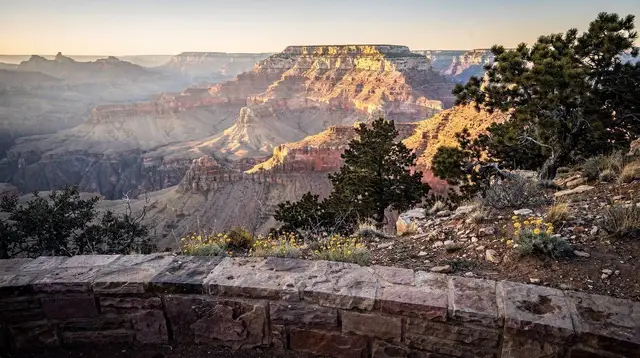
The Grand Canyon South Rim — the actual National Park, roughly 4.5 hours from Las Vegas and a very different destination from Grand Canyon West — has one standout accessible overlook: Mather Point. It sits a short, paved, railed walk from an adjacent parking area and is one of the most-visited viewpoints in the entire park precisely because it delivers a dramatic canyon view for very little physical effort.
Beyond Mather Point, sections of the paved Rim Trail connect several other South Rim overlooks with a level, hard-surfaced path, and the park’s free shuttle system includes accessible buses along some routes. This is a meaningfully different experience from the park’s below-the-rim trails, like the Bright Angel or South Kaibab, which descend steeply into the canyon on unpaved switchbacks and are not accessible by wheelchair at any point.
Given the drive time, the South Rim works best as an overnight trip rather than a single long day from Las Vegas, though full-day guided tours covering the drive both ways do exist for visitors who prefer not to manage the distance themselves — worth weighing against the physical toll of roughly nine hours of driving in one day. A [full-day Grand Canyon and Hoover Dam tour from Las Vegas] combines both stops, though at this driving distance it makes for a genuinely long day regardless of mobility level.
Grand Canyon West: An Accessible Platform, Variable Walking Distances
Grand Canyon West, home of the glass Skywalk, sits on Hualapai tribal land and is a separate destination and operator from the National Park’s South Rim — a distinction worth keeping straight when planning, since the two are roughly 150 miles apart and require entirely different permits and tickets.
The Skywalk platform itself is built with accessibility in mind: a level, railed glass walkway designed to hold visitors safely over the canyon rim. What is harder to state as a blanket fact is the walking distance and terrain between where a vehicle or shuttle drops you and the platform’s entrance — Grand Canyon West’s site layout uses shuttle buses between viewpoints (Eagle Point and Guano Point among them), and the exact drop-off proximity and any unpaved stretches can vary by which shuttle stop and route is in use on a given day.
If a specific walking distance is essential to your plans, it is worth confirming directly with the site operator or your tour provider close to your visit date rather than assuming it matches a previous trip report.
Comparing the Main Options
| Destination | Distance from Las Vegas | Most accessible feature | What to watch for |
|---|---|---|---|
| Hoover Dam | ~45 minutes | Visitor center, overlook, elevators on the standard tour | Some historic tour sections involve stairs |
| Valley of Fire | ~1 hour | Scenic drive pullouts, Visitor Center overlook | Fire Wave and White Domes are unpaved and steep |
| Red Rock Canyon | ~20-30 minutes | Paved 13-mile Scenic Drive with roadside overlooks | Timed-entry reservation required in peak season |
| Grand Canyon South Rim | ~4.5 hours | Mather Point, paved sections of the Rim Trail | Below-the-rim trails are not accessible at all |
| Grand Canyon West | ~2.5 hours | Skywalk platform itself | Shuttle drop-off distances vary by stop |
What This Guide Does Not Promise
It is worth being explicit about the limits of this information, because overstating accessibility can leave a visitor stranded partway to a viewpoint. This guide does not promise that every trail within any of these parks is wheelchair accessible — in every case, accessibility applies to specific named viewpoints and paved paths, not to the park as a whole. It does not promise there is zero walking from any parking area to any viewpoint; even the most accessible stops typically involve crossing a lot or following a short ramped or paved path rather than stepping directly from a vehicle into the view.
And it does not promise identical facilities from one site to the next — Hoover Dam is a built, engineered facility with elevators and a visitor center, while Valley of Fire and Red Rock Canyon are natural desert parks where “accessible” more often means a paved pullout beside a scenic drive than a fully developed path network. Conditions, signage and available tour offerings can also change between the writing of this guide and your visit, so a call to the site or your tour operator shortly before the trip is worth the ten minutes it takes.
Booking a Tour With Accessibility in Mind
Guided tours can simplify a lot of the parking, driving and route-finding that make a solo accessible day trip harder to plan, but booking one does not automatically guarantee every stop on the itinerary is barrier-free. When booking any of the tours to Hoover Dam or the Grand Canyon, ask the operator directly: what vehicle is used and whether it accommodates a wheelchair or mobility device, how far each stop’s walk is from the drop-off point, and whether the itinerary allows for a slower pace at viewpoints.
A [Grand Canyon Skywalk tour with lunch at the Ranch] and similar packaged itineraries can be a reasonable way to see West Rim highlights without self-driving, provided the shuttle and walking-distance questions are answered before you book rather than discovered on arrival.
For a broader look at getting around the city itself with mobility considerations, see the Las Vegas wheelchair accessibility guide, and for weighing drive times against what a single day can realistically cover, the day trips from Las Vegas by drive time guide and the wider accessibility and Lake Mead pages are useful starting points for building out the rest of a trip.
Accessible Ways to See Las Vegas
Verified deep-linked GetYourGuide tours. Book through these links and we earn a small commission at no cost to you.
GetYourGuide does not provide a product photo for this activity — the image shows the meeting point, photographed by us.